Benjamin SimkinThe Mastermind
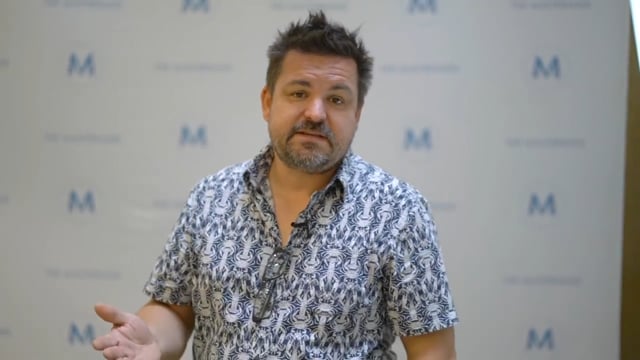
Benjamin Simkin speaking with a microphone

Videos

Benjamin Simkin's talks on growing a business, getting out of the day-to-day, leverage and AI.

13 videos from his YouTube channel, with what people say about him on video and the members of The Mastermind talking about their businesses.

The $500K Bottleneck

You're probably looking at your ads or your offer or your team or your content.

Read the transcript

There's one thing in your business right now holding you back from half a million dollars and you're almost certainly not looking at it. You're probably looking at your ads or your offer or your team or your content. You're probably trying to fix all three at once and that's exactly why nothing's moving. In the next few minutes, I'm going to show you exactly how to find the single constraint that's actually in the way and once you see it, you'll understand why everything you've been optimizing was the wrong thing. Most founders I work with aren't lazy and they aren't stupid. They're doing a lot and that's the problem. They're improving their landing page while the real issue is the sales team can't handle the leads they already have. They're rewriting ad copy while the bottleneck is a fulfillment process that creates churn. They're hiring another person while the constraint is that nobody has a clear outcome to own. A member of the mastermind came to me after spending six months improving their advertising. New creatives, new angles, new targeting. They were obsessed with the front end and the numbers were getting better. Click-through rates were up, cost per lead was down, but revenue hadn't moved because the real constraint was sales capacity. They could generate leads, they couldn't convert them fast enough. Leads were sitting in a pipeline for days before anyone touched them. By the time someone followed up, the prospect had gone cold and found someone else. When they stopped optimizing ads and fixed the sales constraint instead, growth unlocked in weeks, not months, weeks. Here's what most founders say when they're stuck. I need more leads. I need better marketing. I need to hire someone. These are surface-level diagnoses. They sound logical, they feel productive, and they're almost always wrong. Not because leads don't matter and not because marketing's irrelevant, but because those are symptoms. They're what you see on the surface when something deeper is broken. The surface problem is always about more. More traffic, more content, more people, more effort. And the hidden problem is almost always about flow. Something in your business isn't moving and instead of finding it, you're throwing more resources at everything around it. Here's the part most founders don't want to hear. It's not a resource problem, it's an identification problem. You haven't identified where the constraint actually lives. Think of your business like water flowing through a pipe. There's one section of that pipe that's narrower than the rest. That narrow section determines how fast everything moves. It doesn't matter how much water you pour in at the top, it doesn't matter how wide the other sections are, the narrow section controls flow. And here's what makes this dangerous. The narrow section is almost never where you think it is. You feel the pressure at the front of the business because that's where you interact the most. But the constraint is usually sitting quietly in the middle. In a handoff, in a process, in a role nobody owns clearly. You can't fix what you haven't found and you can't find it if you're trying to fix everything at once. So here's how you find it. The first thing you do is map it. Not the version in your head, the version that actually happens. Write down every step a customer goes through from first contact to fully delivered result. Including the hands off, including the waiting, including the parts you don't like to think about. Most founders have never done this. They have a rough idea, they don't have the map. Once you have the map, you measure. How long does a lead sit before someone contacts them? How long before the first call and the proposal? How long between payment and first delivery? You're not looking for where things break, you're looking for where things slow down. And when you measure, something becomes obvious. There's one stage that's significantly slower than the rest. One place where work piles up, one place where things just wait. It might be a person, it might be a process, it might be a missing role, but it's specific and it's singular. That's your constraint. And here's the part that changes everything. You fix only that. Only that, nothing else. This is where most founders fail because the moment they see the constraint, they also see 12 other things they want to fix. Ignore them, all of them. Every improvement you make anywhere else in the system while the constraint remains is a wasted effort. The pipe's still narrow. It doesn't matter how much water you add. Once you fix it, a new one appears. It always does. The business moves forward and the next narrow point surfaces and you do it again. Find the constraint, fix it, find the next one. Growth, it's not a mystery. It's a sequence of constraints identified and removed. Here's the myth. Growth comes from doing more. More channels, more hires, more campaigns, more hours. Here's the truth. Growth comes from doing less. Specifically, it comes from doing the one thing that matters most and ignoring everything else until that one thing is resolved. The founders who scale aren't the ones who work harder, they're the ones who identify the constraint faster and have the discipline to stay focused on it. It's not a function of effort, it's a function of accuracy. How quickly can you find the real bottleneck? How decisively can you fix it? That's the game. Here's the uncomfortable part. Fixing the constraint requires you to stop being the person who does everything and start being the person who diagnoses. Those are two very different roles. The person who does everything feels productive. They're moving, they're busy. They can point to activity at the end of the day and say they worked hard. The person who diagnoses often feels like they're doing nothing. They're sitting with a map, they're looking at numbers, they're asking uncomfortable questions about where things are actually slowing down. But the person who diagnoses is the one who creates growth. The person who does everything is the one who maintains stagnation with more effort. You're not being paid to work hard. You're being paid to find the thing that's in the way and remove it. A member of the mastermind told me something after they went through this process. They said the hardest part wasn't finding the constraint, it was stopping themselves from fixing five other things at the same time. Because fixing everything feels responsible. Fixing one thing feels risky. But fixing one thing is how the pipe opens. And once it opens, everything behind it starts flowing. Here's what happens when you fix the wrong thing. You spend money, you spend time, you spend energy and the business stays in the same place because the constraint is still there. Everything you added just piles up behind it. Here's what happens when you fix the right thing. Every investment you've already made starts producing. The ads you ran start converting because the sales process can now handle volume. The team you hired starts performing because the end off that was stuck on is now clear. The content you created starts driving revenue because the back end can finally deliver. Fixing the constraint doesn't just create growth. It activates everything you've already built. That's the multiplication principle. You don't need to add more to the system, you need to remove the one thing that's preventing the system from working. There's one thing in your business right now holding back half a million dollars. You won't find it by working harder, you won't find it by optimizing everything, and you won't find it by hiring another person or hoping. You'll find it by mapping the flow, measuring the speed, and looking for the one point where everything slows down.

  • The Real Cause of Team Underperformance (And How to Fix It Fast)

    Your team's underperforming, but the problem isn't them.

    Read the transcript

    Your team's underperforming, but the problem isn't them. It's not their work ethic. It's not their talent. It's not their attitude. The problem is how you structured their roles. And there's one change, one that can double their output without hiring a single new person. And I'm going to show you exactly what it is. There's one question you can ask each team member this week that'll tell you exactly where the problem is. I'll give you that question in a moment, but here's what you need to understand first. The way most small businesses assign roles is fundamentally broken. Not slightly off, broken. And the better the person is, the worse the damage. That sounds counterintuitive. Why would your best people be the most affected? I'll explain. But first, let me tell you what happened when this problem showed up in a business I was working with. A member of the mastermind had a team member, sharp, capable, high energy. When she started, the kind of person you'd feel lucky to find. 90 days in, she was different. Output had dropped. Initiative was gone. She used to bring ideas. Now she just waited for instructions. The founder assumed burnout. Considered maybe a bad fit. Thought about having a difficult conversation. But when we looked at her role, the problem was obvious. She was responsible for four different areas of the business. Client communication, content production, internal reporting, vendor coordination. Four responsibilities and no single clear outcome. She wasn't burning out. She was being pulled apart and the structure made it impossible for her to win. Here's what most founders see when output drops. They see a people problem. They think this person isn't motivated or they're not skilled enough or maybe they just don't care as much as they used to. That's the surface reef and it's almost always wrong. Here's the hidden problem. When a person's responsible for multiple outcomes, they can't prioritize. Everything feels equally urgent. They spread themselves across four things and do all four things at 25%. None of them well enough to feel like a win. And here's what's worse. When someone works hard all day and still can't point to a single thing they completed, a single result they produced, motivation erodess. Not because they're lazy, because the structure robbed them of the ability to finish anything. Think about your own experience. The days you feel best are the days you completed something. And the days you feel worst are the days you were busy but accomplished nothing specific. Your team feels the same way every single day. Now multiply that. If you've got five people and each one spread across three or four responsibilities, you don't have five focused operators. You have five people in a fog, all busy, none winning. It's not a talent problem. It's not an effort problem. It's that no one has a clear lane to run in. The fix is called single outcome ownership. And it's exactly what it sounds like. Each person owns one measurable outcome. One, not four, not a department, not 17 different things, one result that they're responsible for producing. Here's how you implement it. Step one, list every team member. Next to their name, write down everything they're currently responsible for. Not their job title, their actual responsibilities, what they spend time on during the day. If anyone has more than two items on that list, you found the problem. Step two, for each person, choose the single outcome that matters most to the business. The one thing that if they crushed it, would move the needle. That becomes the primary. Everything else gets redistributed, systematized, or eliminated. Step three, define the outcome in measurable terms. Not handle client communication. That's a task. Instead, maintain a client response time under 4 hours and a satisfaction score above 90%. Now, they know exactly what winning looks like. And here's the question that I promised. Ask each team member this. What's the one result you're personally responsible for producing this week? If they hesitate, if they list three things, if they say, "I'm not sure," you've got your answer. The structure is broken, not the person. the member of the mastermind that I mentioned, they narrowed that team member's role into one outcome, client retention. Everything else was reassigned. Within 3 weeks, her output doubled, not because she worked harder, because she finally knew what winning looked like, and something else happened. She started bringing ideas to the table again. When a person owns one result and can see their progress, initiative comes back naturally. They don't need motivation. They need clarity. Here's the uncomfortable part. The myth most founders believe is that asking people to do more makes the business more efficient. That versatility is a strength. That if someone can handle multiple things, you should let them. The truth is the opposite. Versatility without focus is a waste. A person doing four things at 25% produces less value than a person doing one thing at 100%. It's not even close. It's not about squeezing more out of people. It's about removing the structural friction that prevents people from doing their best work. Stop asking your team to do more. Start asking them to do less and own it completely. Here's why this is hard to do. When your business was small, everyone wore multiple hats. You wore multiple hats and it worked. So, you built the team the same way. When your business was small, everyone wore multiple hats. You wore multiple hats and it worked. So, you built the team the same way. You gave each person a little bit of everything because that's how you operated when it was just you. But you're not building a team of founders. You're building a team of specialists. And the moment you treat them like miniature versions of yourself, you break their ability to perform. The identity shift here isn't just for your team. It's for you. You have to stop seeing yourself as the person who does everything and start seeing yourself as the person who designs roles so clearly that people can't fail.

  • The Hardest Lessons I Learned Making $100M

    Five life lessons I wish someone had told me earlier.

    Read the transcript

    Five life lessons I wish someone had told me earlier. I spent a decade learning five things that took my mentors as single conversation to explain. That's not wisdom. That's stubbornness disguised as independence. And it cost me years and opportunities I'll never get back. And it wasn't because I was stupid, but because I was proud. Too proud to ask and too proud to listen. Too proud to believe that someone else's shortcut could actually work. Here's what I learned the hard way so you don't have to. Lesson one, being intelligent doesn't translate to income by default. I spent years believing that if I just understood things well enough, if I was smart enough, if I figured everything out myself, money would follow. And it doesn't. The market doesn't pay you for understanding. It's simple. It pays you for solved problems. You can comprehend something perfectly and still be broke because comprehension isn't value delivery. I knew people who understood their industry better than anyone. They could explain every nuance. They could see what others missed instantly. And they were struggling. While less intelligent people who understood less but executed more were thriving. Here's the mechanism. Intelligence that isn't applied is invisible. The market can't reward what it can't see. And most intelligent people spend their energy on understanding instead of output, on internal clarity instead of external delivery. Here's the shift. Stop trying to understand absolutely everything and start delivering something. Pick one problem and solve it visibly and get paid. Understanding is valuable only when it becomes a deliverable. Lesson number two, effort without leverage creates burnout. I worked 80 to 120 hours a week for years, sometimes even more. And I wor as a badge of honor. Look how hard I'm working. Look how successful I am. And I was getting results. I was making some money. But the ratio between the time I was putting in and the money I was getting, it was way off. The input to output equation was pretty broken. I was trading time for money at a terrible exchange rate and calling it success because the absolute numbers were growing. But here's what I didn't understand. Effort is supposed to build systems. Every hour of work should either deliver value directly or build infrastructure for future value. Every hour of work should either deliver value directly or build infrastructure for future value. And most of my hours were doing neither of those two things. They were just maintaining and patching. Just keeping myself busy, keeping things running that should have been automated or eliminated. That's not work. That's overhead. The lesson, if your effort isn't creating leverage, either deliverables or systems, it's just burning time. Working hard on the wrong things isn't dedication. It's avoidance. and eventually it breaks you. Lesson number three, most learning is avoidance disguised as progress. This one stump. You know, I love learning. I'm I'm constantly consuming information. I read a lot of books, listen to a lot of podcasts, and learn from very smart people. And for years, all that time and energy I put into it, I told myself I was being productive. I'm investing in myself. But here's the truth. Most of what I learned never got implemented. It just sat there in my head and disappeared later, making me feel more knowledgeable, while my actual output stayed the same. Learning becomes avoidance when it substitutes for action. When you read another book instead of shipping what you've already got, when you take another course instead of testing what you already know, when you research competitors instead of talking to customers, there's a point where more information doesn't help. It delays. I had to learn to distinguish between learning that enables action and learning that postpones it. The first is valuable. The second is procrastination with a good reputation. Now I ask you, will this information change what I do this week? If not, I don't need it right now. Lesson four, money follows value distribution, not value creation alone. You can create enormous value and capture almost none of it. I did this for years. I help clients generate tens and hundreds of millions of dollars. I got paid a fraction for the millions of dollars I made for my clients. I tell myself it was fine because I'm providing value. But providing value without capturing value is called charity. And I wasn't trying to run a charity. The market doesn't pay for value that exists. It pays for value that's positioned, packaged, and distributed. The same skill positioned badly gets paid little. The same skill positioned well commands premium fees. It's not about what you could do. It's about how what you could do is perceived. This sounds completely cynical, but it's not. It's just accurate. Distribution. Getting your value in front of the right people in the right way is half the game. You can be the best in the world and starve if nobody knows who you are or if the wrong people know you or if you position yourself as a commodity. Value creation is necessary, but value distribution is what gets you paid. Lesson number five, if you don't choose a direction, entropy chooses one for you. And I think this is the deepest lesson. Life has a default trajectory. And it's not good. Without conscious direction, you drift towards whatever is easiest, whatever is comfortable, whatever requires the least friction. And that drift, it compounds. One year of no direction may not look so bad. 5 years looks concerning. And 10 years looks like a life that happened to you instead of a life that you built. I see this constantly. Talented people who never got around to their real goals, who spent decades in acceptable situations while their actual ambitions collected dust. They didn't fail, they drifted. Direction requires decision. And decision is uncomfortable because it closes options. But here's the thing. Not deciding is also a decision. It's a decision to let circumstances choose. I had to learn that the direction of choosing a direction is much smaller than the pain of waking up somewhere you never meant to be. Choose actively or become what happens to you by default. So these five lessons I wish I'd known 10, 20 years ago. Intelligence doesn't automatically convert into income. Effort without leverage creates burnout. Most learning is disguised as avoidance. Distribution matters more than creation. Without direction, entropy chooses you. None of these are tactics. They're foundations. Build on them or spend years learning the hard way.

  • I Hacked My School at 16. It Taught Me More Than Business School

    I dropped out of high school at 16, but not for the reason you'd expect.

    Read the transcript

    I dropped out of high school at 16, but not for the reason you'd expect. I didn't leave because I was failing. I wasn't skipping class or getting into trouble. I got kicked out for hacking into the school's computer systems. And that experience taught me something about learning structure and success that no classroom ever could. When I was 13, my parents scraped together enough money to buy me a secondhand computer. And something in my mind ignited. I didn't just want to use it. I wanted to understand it completely. I spent every night, all night learning about how it all works. Not because anyone told me to or advised me that it's a good career, but because I just couldn't stop my insatiable appetite for how it works. By 16, I'd self-taught five programming languages and written tens of thousands of lines of code. This school had a computer system, and I was intrigued. I found ways to hack in, not to change grades because I didn't really care about my grades, but I found ways in because I wanted to see if I could. I'd expose one vulnerability, the IT teacher would patch it. Next week, I'd find another one and do the same. Eventually, they called me. They sent me home on an indefinite suspension. And here's what I learned from that. School punished curiosity instead of directing it. The institution wasn't set up to channel intense interest into productive outcomes. It was set up to process average students through a standardized system. And when someone didn't fit that system, instead of adapting, they removed the problem. Dropping out didn't make my life easier. It removed the safety net. There was no fall back, no credential to hide behind and no system or structure to carry me forward. I had to learn real world skills really fast or fail publicly. And that's the part people romanticize about dropping out that's actually painful. Forced competence. When there's no backup plan, you either figure it out or you don't. There's no middle ground. There's no good enough. I was 16, no qualifications. Someone called my parents asking a weird question if I had the ability to hack into their company's computer systems. It's very intriguing for them. Their IT manager of this commercial real estate firm had some sort of dispute with the company and the IT manager had locked the entire company out of their entire system, meaning the company was weeks away from bankruptcy if they couldn't gain access to their data again. So, they asked me if I could help. I spent a weekend restoring access to their entire system, got them back up and running, and I got paid $2,000 for that. And something happened that weekend as well because the owner told me I was smart enough to run my own company, which at the time I was 16 and didn't really stick that well, and I was very confused about what he was talking about. But later on, that advice was worth more than the money I was paid. Now, I want to be clear about this. I don't think most people should drop out. Not because skills are valuable, but because most people aren't ready to operate without a structure. Dropping out worked for me because I'd already had the skills that had value. I could create outcomes. I had something to offer. Without that, dropping out is just dropping out. It's not a romantic story. It's not a badge of honor. It's just a limitation. So, the lesson in this video isn't quit school. The lesson is stop outsourcing thinking. School trains you to follow instructions. Don't question anyone. Wait for someone to tell you what's important. defer to some sort of authority. That's useful for employment. It's deadly for entrepreneurship. The real skill, the one school doesn't teach, is directing your own attention, deciding for yourself what matters, and learning without permission. And I did that with the computer, not because I was necessarily gifted, but because I was obsessed. And obsession creates competence faster than curriculum. Looking back, what actually mattered wasn't necessarily dropping out. It was being forced to create value without credentials. No degree to hide behind, no institution vouching for me, just can you solve this problem or not? That filter is brutal, but it's also honest. The market doesn't really care about his story. Cares about your output. I learned that at 16. Most people learn it at 40 or never. When there's no safety net, you develop skills differently. You don't learn abstract future value. You learn because you need it right now. The urgency creates competence faster than any course. Here's an uncomfortable truth. Most people are more capable than they realize or give themselves credit for, but they've never been forced to find out. The structure they're in, the job, the industry, social expectations, their spouse, or whatever, keeps them comfortable enough to never test their limits. Dropping out removed that comfort from me. Not by choice, but by circumstance. I don't recommend manufacturing crisis, but I do recommend questioning whether your current structure is developing you or just containing you. I dropped out of high school at 16 because they kicked me out for curiosity that they couldn't control. 20 years later, I built multiple companies, generated hundred million dollars in revenue for myself, and now countless agency owners, founders, and consultants build businesses that create freedom. So, the lesson isn't really about school. It's about this. Sometimes systems that aren't designed for you will either hold you back or push you out. Either way, the real education happens when you take responsibility for your own development. No one's coming to teach you what actually matters.

  • You're Using A.I. Wrong

    If AI is making you busier, you're using it wrong.

    Read the transcript

    If AI is making you busier, you're using it wrong. And most people are. They think that AI is a magic wand. Pointed at your problems and they disappear. But that's not what's actually happening. What's actually happening is AI is amplifying chaos for most people. And the people who understand the distinction are pulling away fast. AI isn't meant to replace thinking, generate random ideas, do more work faster. That's not leverage. That's just faster, busy work. If you're using AI to crank out more emails, more content, more proposals, and you're still drowning, you've missed the point entirely. The core mistake most people make is pointing AI at chaos. Halfformed thoughts, unclear positioning, broken processes, vague instructions. AI is not going to fix that. It's just going to amplify the chaos you already have. You're not getting better at output. You're getting faster garbage. Garbage in, faster garbage out. That's the reality no one talks about. Here's the uncomfortable truth. AI is a force multiplier. If the system's bad, the results are worse. Force multipliers do not discriminate. They multiply whatever you give them. A false multiplier on a good system creates compounding value. A false multiplier on a broken system creates compounding problems. Most people complaining about AI quality are looking at the wrong variable. The AI isn't the problem. It's the input that is. AI is good at executing clear rules, repeating decisions, removing human judgment from known outcomes. That's it. That's the whole value proposition. It's not creativity, not strategy, not thinking. It's execution of clarity. Here's the distinction. Wrong use. Write me better copy for my Facebook ads. Right use. Apply this framework to this offer and follow these constraints in this voice for this specific audience. One guesses and one executes. The first prompt gets you generic output that requires heavy editing and maybe you can't even use it at all. The second prompt gets you usable work that you can adjust and edit. The difference isn't the AI, it's the quality of the instructions. Most people expect AI to think for them to save a broken business to generate strategy from vague wishes. AI only works when direction already exists. If you don't know what you want, AI can't really help you find it. It can only multiply confusion into more confusion. AI rewards clarity, not intelligence, not creativity, not hustle. This is important. The people winning with AI aren't necessarily smarter than you. They're clearer. They know what they want and they know the frameworks and they know their constraints. So, when they prompt AI or they use AI, they get leverage. When unclear people prompt AI, they get noise. This is why some businesses are 10xing productivity with AI while others feel like it's a waste of time. Same tools, different clarity. The bottleneck isn't the technology, it's the thinking that precedes the technology. AI belongs after positioning is clear, offers are defined, rules exist, audience defined, not before. If you haven't figured out who you serve and what you offer and how you deliver, AI is not going to figure it out for you. It'll just generate a thousand variations of confusion. I see this constantly. The founders using AI to brainstorm positioning, generate offers, and figure out strategy. And they end up with more options than what they started with in more confusions. More paths, more possibilities, more analysis paralysis because AI is brilliant at generating options. Terrible at making decisions. That decision has to come from you. Then AI can execute. direction first, technology second. The sequence really matters. This is why smart founders struggle with AI and systematized businesses explode in a good way with it. Smart founders are used to thinking through everything first. So they use AI as a thinking partner and it generates more thinking. Systemized businesses have already done the thinking. They use AI as an execution layer and it generates output. One creates complexity, the other creates leverage. AI isn't the strategy, it's the executive. If you're trying to use AI to figure out what to do, you're asking the wrong questions. Figure out what it is that you want to do first, then use AI to do it at scale. If AI feels overwhelming, it's because you're asking to think instead of telling it what to do. AI does not reduce complexity. It reveals it. If your prompts are unclear, that's a mirror. Your strategy is unclear. If your outputs are generic, that's a mirror. Your positioning is going to be generic. If you're spending more time editing than using, it's a mirror. Your frameworks aren't tight enough yet. Fix the clarity and the AI becomes useful. AI is just a tool and like any tool, it only works as well as the person wielding it. Get clear first, then multiply.

  • This Silently Kills Your Business

    There's something killing your potential right now and you don't even know it's happening.

    Read the transcript

    There's something killing your potential right now and you don't even know it's happening. It's not a lack of skills. It's not a lack of resources and not a lack of information. It's something completely invisible. Something that's been programming you since the day you started. And until you see it, you cannot fight it. I call it settler's osmosis. And it's kills more dreams than any market crash, any failed business, any external obstacle combined. Because those obstacles you can see, you can fight them. you can work around them. This one lives inside of your own mind and it whispers things like this is fine. I'm doing okay. Maybe this is just how it is. And the terrifying part, it feels like your own voice. But it's not. It's the average of every person you've ever been around. Here's what Settler's osmosis actually is. Your brain is an averaging machine. It looks at everyone around you and calculates what's normal and programs you to match. This happens without your permission, without your awareness, and without your consent. If everyone around you makes $100,000 a year, your brain decides that $100,000 is success. Anything above that feels unrealistic. Anything below that feels like failure. If everyone around you works 60 hours a week and struggles, your brain decides that's what business should look like. Anything easier feels suspicious. Anything harder feels normal. If everyone around you thinks making seven figures is for other people, your brain agrees and quietly stops pursuing it. This isn't motivation. This isn't mindset. This is neurological programming and it's happening to you right now. Your ceiling isn't set by your capability. It's set by your environment. If you're the most successful person in your circle, your brain has already stopped reaching because as far as it knows, you've already won. And it gets worse because it's not just your peers. It's your family. It's your friends, the people who love you the most. They tell you things like, "Business owners are miserable. Money isn't everything. Be grateful for what you have. Don't you have enough already? Don't get too ambitious." And they mean well. They're trying to protect you from disappointment, from failure, from reaching too high and failing. But here's what their protection actually creates. A ceiling. A ceiling disguised as wisdom. A ceiling that feels like love. is something you can't fight because it came from the people you trust. And your brain absorbs all of it automatically. Every be realistic, every that's risky, every maybe you should play it safe. It all becomes part of your internal programming. And you start to believe these limits are your own ideas. But they're not. They're inherited. They're adopted from people who've never reached the level you're trying to reach. This is setless osmosis. You settle for being second best, not because you chose to, but because your environment made settling feel like common sense. You settle for just getting by, not because you lack ambition, but because everyone around you was just getting by as well. So your brain thinks that's normal. You settle for working 12, 14, 16 hour days, not because you have to, but because everyone you know does as well. So your brain can't imagine an alternative. You settle for seeing your family and friends on weekends, not because you don't love them, but because that's what business owners do. At least that's what every business owner, you know, does. Here's the brutal truth. Your brain is constantly asking one question. What is normal? And then it optimizes for that. If your normal is struggle, you'll struggle. If your normal is grinding without growing, you'll grind without growing. If your normal is hitting the same ceiling year after year, you'll hit that ceiling forever. Not because you can't break through, but because your brain doesn't believe there's anything beyond that. So, what do you do about this? You can't think your way out of settler's osmosis. Mindset work won't fix it. Affirmations won't fix it. Visualization won't fix it because all of those happens inside the same brain that's already programmed. You're using a corrupted operating system to try to fix the corruption. It doesn't work. The only thing that does work is changing the inputs, new environment, new references, new normal. If you want your brain to believe seven figures or eight figures is normal, you need to be surrounded by people who make seven and eight figures. If you want your brain to believe 4-hour work days are possible, you need to be surrounded by people who work 4 hours a day. If you want your brain to believe that freedom, wealth, and peace can coexist, you need to be surrounded by people who have all three. This is why masterminds matter. Not for the content, not for the strategies, not for the accountability, for the recalibration. When your brain spends time around people operating at a higher level, it automatically updates what it thinks is possible. What feels like a ceiling becomes a floor. What felt unrealistic becomes obvious. What felt like for other people becomes for me too. That shift doesn't happen through effort. It happens through exposure. Here's what I need you to understand right now. Your environment is programming you. Whether you chose that programming or not, whether you like it or not, whether you're aware of it or not, the only question is, did you choose the programmers? If you're surrounded by people who've never been where you want to go, they're programming you to never get there. If you're surrounded by people who've already arrived, they're programming you to arrive, too. It's that simple, and it's that important. The ceiling in your head isn't yours. It belongs to the people you've been around. If you want a new ceiling, you need new people. Settler's osmosis kills more dreams than anything I know. Not because people lack talent, not because they lack drive, not because they're not working hard enough, because their brain settled for a ceiling that was never theirs to begin with. An average calculated from people who've never reached what was possible. A normal defined by limitation. A cap set by inherited beliefs disguised as wisdom. You can fight markets. You can fight competitors. You can fight obstacles. But you can't fight your own brain. You can only change what you feed it. New rooms, new people, new references for what's normal. That's not inspiration. That's neuroscience. Choose your environment or your environment will choose your ceiling.

  • Do It Alone, Broke & Tired

    The story you're telling yourself about why you're struggling is the exact thing that keeps you struggling.

    Read the transcript

    The story you're telling yourself about why you're struggling is the exact thing that keeps you struggling. I'm doing it the hard way. I'm building real skills. I'm not taking shortcuts. That's not discipline. That's ego dressed up as virtue. And it's costing you something you can't get back. I've watched founders work three times harder than their competitors. They know more. They sacrifice more. They grind longer and lose to people who did one thing differently. It's not a better strategy. It's not more funding. And it's not more luck. something simpler, something that probably makes you uncomfortable to hear because if I'm right, it means the last few years didn't have to be this hard. And that's a painful thing to sit with. Doing it alone feels like the right thing. It feels faster. It feels cleaner. It feels less complicated. No one to slow you down. No opinions to manage. No egos to navigate. Just you, the work, and the results. But here's what nobody tells you in the beginning. It's actually true. You will go there faster alone. When the problems are small, you can solve them. When the stakes are low, you can recover from mistakes. When the path is obvious, you don't need outside perspective. Doing it alone just works until it doesn't. And the shift happens so gradually that you don't notice. The problems get bigger, but you've gotten better at solving problems, so you keep solving them. The stakes get higher, but you've survived high stakes before, so you keep pushing. The path gets unclear, but you've always figured it out. So, you just keep figuring it out. And somewhere in there, without realizing, independent becomes isolated, and isolated becomes stuck. But it doesn't feel like stuck. It just feels like hard work. And that's the trap. The illusion. Solo grinding creates the illusion of progress. You're busy. You're working. You're solving problems every day. It feels like movement. But here's what you can't see from the inside. The blind spots. When you're alone, there's no one to tell you that the offer isn't working. The positioning is weak. That problem was solved three years ago by someone else. You're not just doing the work. You're inventing wheels that already exist and you don't even know it because there's no one around you to show you. I watch people spend 2 years solving a problem that a single conversation could have fixed. 2 years. That's 2 years of progress. Not because they weren't working hard, because they were alone. And alone means no perspective. Here's what I've observed after working with hundreds of founders. Most people stay stuck not because they lack effort, but because they lack perspective. Effort without perspective is just motion. You can work 80 hours a week and still be going in the wrong direction. You can solve problems constantly and still be solving the wrong problems. You can improve every day and still be improving the wrong things. Perspective is what tells you where to point your effort. And perspective doesn't come from within. It comes from outside. From people who've already been where you're going. from people who can see what you can't. I've never seen someone break through a real ceiling in isolation, not once. Incremental progress, sure. Survival, yes. But the big breakthroughs, the kind of leap that changes the whole trajectory of your business, that always comes from exposure. Exposure to people, ideas, environments that force a shift. And you cannot get that alone. Independence without leverage eventually turns into exhaustion. You can only carry so much by yourself for so long. At first, it's manageable. Then it's heavy. Then it's crushing. And you adapt. You tell yourself, "This is normal business." You tell yourself, "Everyone struggles like this." You tell yourself, "It'll get easier once you hit the next milestone." But it doesn't because the structure hasn't changed. You are still the bottleneck, still the decision maker, still the only one who sees the full picture. And being broke and tired becomes normal. But here's what you need to understand. Being broke and tired is not normal and it's not a badge of honor. It's not proof of dedication. It's not evidence of work ethic. It's a symptom. It's a symptom of a system that isn't designed for leverage. And you can't fix a system problem with more effort. You can only fix it with better perspectives. The cost of doing it alone isn't about money. It's years. Years spent figuring out things that could have been learned in weeks. years spent making mistakes that could have been completely avoided. Years spent at a level that could have been broken through and you don't get those years back. This is the part people don't calculate. They look at the cost of getting help. Masterminds or coaches or advisers and they see the dollar amount, but they don't see the cost of not getting help, the invisible cost, the opportunity cost, the years cost. What would it be worth for you to skip 2 years of struggle? What would it be worth to avoid the mistakes that cost you your best opportunities? What would it be worth to you to see the path clearly instead of stumbling through it? That's the real calculation. And most people never make it. At a certain level, the bottleneck isn't work ethic. It's exposure. The people who break through aren't working harder than you. They're not necessarily smarter than you. They're not more talented. They just have access to perspectives that you don't. They're in rooms where problems get solved faster, where mistakes get caught earlier, where the path is clearer because somebody else has already walked it. That's why masterminds exist. It's not for motivation. It's not for networking. Not for the warm fuzzy feeling of community. For perspective. When you're surrounded by people who've already solved the problem you're stuck on. When you're in a room where your ceiling is someone else's floor, when you have access to thinking that took decades to develop, years collapse into months. Problems you've been wrestling with for years get solved in a single conversation. Blind spots you didn't know existed get exposed in minutes. paths you never knew were available suddenly become obvious. It's not cheating. It's not weakness. That's how every significant business career and fortune was actually built. Nobody does it alone despite the news articles. The people who claim they did are either lying or they forgotten the conversations that changed everything. Doing it alone, broke and tired, is not a strategy. It's a default. The path you end up on when you don't consciously choose a different one. And it works for a while until it doesn't. Until you hit a ceiling you can't break through alone, until the exhaustion catches up, until you realize you've been trading years for pride. The question isn't whether you can do it alone. You already proven that you can survive that way. The question is whether you want to keep paying the cost. Because there is another way. A room where your problems aren't unique. Where your struggles have already been solved a long time ago. Where the next level is not a mystery. It's a map someone else has already drawn. The only thing standing between you and that room is letting go of the story that doing it alone is noble. It's not. It's just expensive.
  • Do this if you want Financial Freedom in 2026

    There are people making $50,000 a year who are more free than executives making $500,000.

    Read the transcript

    There are people making $50,000 a year who are more free than executives making $500,000. And I know people who have made it seven figures, eight figures, who are more trapped than when they first started. This probably sounds wrong because we've been told the same story our whole lives. Make more money, then you'll be free. But here's what nobody talks about. The path most people take to make more money destroys the freedom that they were trying to create. And by the time they realize it, they're in too deep. The business needs them. The lifestyle needs them. The whole thing falls apart if they step away. And that is not freedom. That's a prison with a nice view. And the terrifying part, most people building toward financial freedom right now are actually building toward that prison. And they won't know until it's too late unless they understand what I'm about to show you. See, financial freedom is not actually income. It's not a number in your bank account. It's not a revenue milestone, and it's not a vague statement, not enough money not to work. It's waking up with optionality. The ability to say no. The power to choose what you do, when you do it, and who you do it with. That is true freedom. And you can have high income without any of that. I know people making seven figures who can't take a week or even a day off. Who check their emails at midnight and again when they wake up. Who feel trapped by the very business that was supposed to set them free. And that is not freedom. That's a high income prison. The bars are just nicer. High income without leverage is just a better prison. Here's how it works. You start a business, you work hard, you grow, revenue increases, and so does responsibility. more clients, more demands, more complexity. You make more money, but you also become more essential, more trapped, more dependent on showing up. The income went up, the freedom went down. That is the trap most entrepreneurs I see fall into. They optimize for revenue instead of optionality. They build businesses that need them instead of businesses that set them free. And by the time they realize it, they're in too deep. The prison is built. The trap is set. And the only way out looks like starting over. Most people try to optimize money instead of optionality. They ask, "How do I make more money instead of how do I need less? How do I depend less? How do I become less essential?" Optionality is the real asset. Money without optionality is stress. And before you think this video is about being in poverty, that's not what this video is about. You want to think about what you actually want. Is it actually money you want or is it what money actually gets? What it represents? The outcomes. Is it more time, choice, control, peace? You can actually have those without being rich. And you can be rich without having any of them. So the question isn't how much money, it's what is it you truly want? The mechanism. Freedom comes from owning systems, not being trapped inside them. That is the key distinction. You can be part of a system that makes money or you can own the system that makes money. One requires your presence. The other requires your design. Employees are part of systems. Business owners often are too. Even if they don't realize it, they're the most essential employee in most businesses. They have to be present every day. They have to make every decision. They hold everything together. That's not ownership. That's operation. Real ownership is architecture. Building something that runs without you, that produces whether you're there or not. Dependency on clients kills freedom. Dependency on platforms kills freedom. Dependency on your own motivation is going to kill your freedom. Every dependency is a chain. The goal is not to eliminate work. It is to eliminate dependency. Wealth compounds quietly when structure replaces hustle. Sure, hustle does work for a while, but hustle doesn't compound. It trades time for money at a fixed rate. Structure compounds. A system you build once can produce forever. An asset you create once can earn repeatedly. A business you design correctly can grow without proportional effort. That's how wealth actually builds. Not through more hours, through better architecture. Every hour of hustle earns once. Every hour of system building earns forever. Most people spend 90% of their time on earning. and 10% on building. You have to flip that ratio and watch what happens to your freedom and your money. Freedom is a consequence of design, not by effort. You can't hustle your way to freedom. You can only architect it. If you want financial freedom in 2026, the question isn't how do I make more? It's how do I depend less? How do I build systems instead of being one? How do I create assets instead of trading time? These questions will lead to your freedom. The other questions lead to higher income and a higher stress in equal proportion. Design for optionality, build for independence, and let the wealth follow. That's the path. It's not exciting, but it works.
  • Why Success Feels Hard

    Success feels hard for a reason.

    Read the transcript

    Success feels hard for a reason. Not because you're lazy, not because you're missing motivation, but because everything depends on you. And if that sentence made you defensive, if you thought, "Well, it has to depend on me. It's my business." Then this video is specifically for you. Because that belief is exactly what's making everything harder than it needs to be. Most people think success is hard because they need more discipline, better habits, more confidence. And so they chase those things. They read books on productivity, listen to podcast, they try morning routines. They hire coaches to help them level up and stay accountable. And maybe some of that does help marginally. But here's a reality. Success is hard when outcomes rely on human effort. Not hard work, human effort. The difference matters. Hard work can be systematized. Effort is what happens when systems don't exist. Think about it. Every time you have to push through something, every time you have to stay motivated, every time you have to remember to follow up, that's not discipline. That is a missing system. If results require you to remember everything or try harder or being on everything, you don't have a system. You have a hope-based workflow. And hope does not scale. Here's the distinction that changed everything for me. Effort creates progress. Systems create inevitability. Progress is fragile. It depends on showing up. It depends on motivation. And it depends on everything going right. That you feel amazing. That you feel motivated. Inevitability is structural. It happens when you feel like it or not automatically. It happens on your bad days. It happens when you're not watching. Success becomes easy when your outcomes are automatic. Not effortless. Automatic. The work still exists. You still have to do some work. But it doesn't depend on heroics. When I say systems, most people hear software, dashboards, complicated SOPs, documentation that no one reads. That's not what I mean. A real system is just three things. A rule, a trigger, a default action. That's it. Simple. Here's an example. No system. Follow up when you remember. System. Every lead gets contacted within the first 10 minutes. One relies on willpower. One runs without you. The first one works when you're having a good day, when everything's going right, and you feel great. You had enough sleep. The second one works every day. And here's what most people don't understand. Building the system takes less time than managing without one. The overhead isn't in creation. It's the chaos of operating without structure. Every time you have to think about something that should have been automatic, you're paying a tax. Every decision that could have been made in advance is draining capacity that could go somewhere else. Systems aren't just about efficiency. They're about removing unnecessary decisions. If systems are so valuable, why doesn't everyone build them? Because systems remove drama and most people are addicted to drama without even knowing it. Systems remove hero moments, the need for you to be there. The rush of saving the day and the feeling of being needed, the story you tell yourself about how hard you work. Chaos makes people feel busy. Busy feels productive and productive feels valuable. But it's a trap because busy is not productive and productive isn't valuable if the same outcome could have happened with less effort. Systems make people feel replaceable and that threatens identity. If the business runs without you, what are you for? That question scares people. So they avoid building systems. They stay in the chaos. They keep being needed and they wonder why success feels so hard. There's a moment when success changes. When leads come in without effort. When sales are happening without you even being there and when delivery runs without supervision perfectly. That's when success stops feeling heavy. It's not because you're doing less, but because the weight is distributed differently. The load isn't on your shoulders anymore. It's on the structure. This is what most productivity advice misses. They teach you to carry the load better to get more done in less time. I'm telling you to move the load somewhere else. The shift isn't working harder on the right things. It's building systems so the right things happen without effort. If success feels hard right now, you're compensating for missing structure. Hard work is usually a signal. It's not a virtue. When you're grinding, when you're pushing, when everything feels like a battle, that's not evidence of dedication. That's evidence of architectural debt. Something upstream is broken and you're patching it downstream with effort. Smart people burn out like this. Talented founders stall because of this. And hustle eventually fails because of this because they never replace effort with design. They just get better at effort or at least try to until effort runs out. Success is hard until it's engineered. After that, it's boring. And that's the point. The goal isn't drama. The goal isn't the feeling of conquering challenges every day. The goal is building something that can produce results consistently, predictably, and without your constant involvement. Boring means it's actually working. If your business feels chaotic, it's not because the market is tough or the competition is fierce or you haven't found the right strategy or piece of information or secret strategy or pill. It's because the architecture is incomplete. Fix the structure, the struggle disappears. CEOs don't have better time management skills. They have fewer decisions and fewer things competing for their attention. And that is the whole secret as to why CEOs of large companies get way more done than you might do in a year or two. It's the whole secret. Everything else is just implementation. If you've read books on time management, tried productivity system, and still feel overwhelmed, the problem isn't your discipline. It's that you're playing a different game than the people who seem to have figured it out. Most people think CEOs wake up earlier, cold blind, choose better planners, have more discipline than the rest of us, have some sort of like insider knowledge. None of that is the real difference. I've worked with many CEOs of multi-million dollar and billion dollar companies. I've seen them work in action. I've worked with CEOs. I've worked with billionaires. I've watched how they operate. They don't have special powers. They don't have secret morning routines. They don't have apps that you haven't discovered. What they have is constraints. Not fewer constraints, different ones. Employees manage time. CEOs design constraints. That's the fundamental distinction. An employee asks, "How do I fit everything in my day?" A CEO asks, "What shouldn't I be deciding or doing at all?" One is optimization. The other is architecture. And no amount of optimization beats good architecture. Here's a diagnostic for you. If you're busy, you're deciding too much. You're doing too much. If you're overwhelmed, you're involved where you shouldn't be. Business is not a badge of honor. It's a symptom of unclear boundaries and missing systems. Every time you feel rushed, ask yourself, "What decision did I make today that should have been made last quarter? What judgment call am I making repeatedly that should be a rule? What involvement do I have that isn't actually necessary? Time problems are almost always decision problems in disguise. Here's what CEOs actually do with their time. They eliminate decisions. They set rules in advance. They push thinking upstream so execution doesn't require thought. This is counterintuitive to what most people think. We think good executives are decisive, quick thinkers, people who can make calls fast. And some of that's true, yes, but the best ones don't make decisions that fast. They just make them once. They make him in advance. Then they encode that decision into a rule that the company runs on and the rule runs without them. Here's a simple example, a non CEO time management. What should I work on today? So you wake up and you think, okay, what am I going to work on today or this week? CEO approach. Mondays are for this, Tuesdays are for that, and Fridays are for nothing new. No decision required. The day is structured before it starts. Energy goes into execution, not planning because it was done a long time ago. The average person spends the first hour of every day waking up and trying to figure out what to do today. The CEO spends that hour last quarter. That's the gap. It's not discipline. It's architecture. Calendars organize chaos. They don't actually remove it. You can block time perfectly and still feel overwhelmed because the blocks are filled with reactive decision. If your week needs constant rearranging, the system is actually broken. The calendar isn't actually the problem. It's not your time. It's the symptom. The real question isn't when should I do this? It's should I be doing this at all. Most time management advice helps you fit more things into your day. It's the wrong direction. The goal has never been to fit more stuff in. It's to take most things out. Time isn't managed daily. It's managed over time. CEOs win because they redesign their reality, not their to-do list. They change what exists in the first place. They're the creators. By the time something hits their calendar, the decision to do it was made months ago. No debate, no negotiation. No. Should I do this now? Should I do it at all? The architecture is already built. Here's what most people get wrong. They try to optimize hours instead of eliminating entire categories of work. Think about that. You're trying to do email faster when you could be receiving less email. You're trying to run meetings better when you could have less or no meetings at all. You're trying to make decisions quicker when you could be making decisions never. Efficiency is a trap without leverage. Getting 10% better at doing something you shouldn't be doing is a complete waste of time, and most people are optimizing at that level. Here's a CEO rule of thumb to follow. If something repeats, it becomes a rule. If it requires judgment, it's pushed up or removed. Pushed up means decide at a higher level so it never reaches daily thinking. Removed means stop doing it entirely. Delegate, automate, or delete. This is how you stop burning out. This is how you stop context switching all day. This is how you regain mental space. Time freedom comes from structure, not balance. Work life balance is a myth pedled by people who don't understand leverage. You can't balance a system that's architecturally broken. The goal is an equilibrium between work and life. The goal is a business that doesn't require your constant attention. Then balance happens automatically. I work 25 maximum 30 hours a week now. Not because I'm balanced, but because my system is designed correctly. The hours aren't managed. They're protected by architecture. CEOs don't manage their time. They make certain outcomes inevitable and everything else just disappears. The calendar clears when you stop doing things that just don't matter. The overwhelm lifts when decisions are made in advance. The stress dissolves when systems run without your involvement. This isn't motivation, it's engineering. And if your days feel chaotic, do not look for better planning tools or systems or productivity books. Look at the architecture. Something upstream is broken. Fix the structure. The time appears.

  • The BIGGEST Mistake Business Owners Make

    Most entrepreneurs fail not because their business is broken, but because they're fixing the right things in the wrong order.

    Read the transcript

    I've generated over $2 billion in revenue for clients, built my own companies into nine figure outcomes, worked inside more businesses than most people will ever see in their lifetime. And after all of that, all the wins, the losses, the broken systems, the impossible turnarounds, I've discovered something that should honestly frustrate you. Most entrepreneurs fail not because their business is broken, but because they're fixing the right things in the wrong order. Here's what nobody tells you. When you fix things in the wrong sequence, you're not just wasting time. You're building a business that can never scale. Not because the business is broken, but because the foundation can't support what you're trying to build, and the foundation isn't what you think it is. There is a sequence, a diagnostic, a hierarchy. And once you understand it, everything changes. But most entrepreneurs who are working on level four when level one is the bottleneck. And that's why nothing, no tactics, funnels, or ads will ever save it. You know this feeling? You're working harder than ever, trying new tactics, optimizing funnels, running better ads, and the business barely moves. Every fix creates a new problem. You're like pushing a boulder uphill. You're not imagining it. You're just fixing things in the wrong order. The symptoms look like marketing problems, sales problems, funnel problems. The root cause is almost always a sequencing problem. And here's what nobody tells you. I'm about to show you what that foundation actually is. You're fixing what's visible instead of what's foundational. You're optimizing what's exciting instead of what is essential. You're multiplying what's broken instead of fixing what's broken first. When you fix things in the wrong order, your business becomes a treadmill. You work harder. Business hardly moves. Every fix is creating more issues, more chaos. I'm going to give you a fourlevel diagnostic, and I'm going to show you all four levels right now. But here's what matters. You can't skip levels. You can't work on the fourth level before you work on one, two, and three. The sequence is non-negotiable. And once you see it, you'll know exactly where you've been going wrong. Level one is what I call demand validation. It's where most entrepreneurs get it wrong. Before you fix anything, you need to validate demand. Not with enthusiasm, not with compliments, not with this sounds cool, or I think this is going to work, but with money changing hands. Demand validation isn't about whether people like your idea. It's about whether the market is already paying for solutions to this problem. If they're not already paying, you're not validating demand. You're trying to create it. And creating a demand is a completely different game than scaling validated offers. Too many entrepreneurs are trying to scale something the market just isn't that into. They're trying to convince people to want something that they just don't want as opposed to offering something they already do want. That's the difference between scaling and delusion. Ask yourself, is the market hungry? Does the problem you're solving hurt enough? Are there already people paying other people for solutions? Does the offer land instantly without explanation? If you don't validate what it is that you're selling has demand, you're going to have the best ads, the best funnel, the best copywriter in the world. But if the market doesn't crave what you're selling, you're just polishing something nobody wants. This is where most struggle. They're working on optimizing conversion, building teams, systems when they haven't fully validated that their offer can scale. So, what happens if you do skip this step? Well, you're building everything on a foundation that can't support it. I'm about to show you what level two reveals about your business. Here's where amateurs get exposed. Everyone talks about rorowaz. Everyone talks about CPA or CAC. Everyone wants cheaper leads. But the business that wins is the one that can spend the most on client acquisition. And who can spend the most? The business with the highest lifetime value. Lifetime value is how much a customer is worth to you over the entire time they stay with you. Lifetime value is not just a metric. It's your competitive advantage. It's your strategic weapon. Because the business with the highest lifetime value can afford to pay more for customers, more in ads, more in marketing. And when you pay more, you win. Here's what that looks like. If your competitor's lifetime value was $1,000, and yours is $10,000, you can outbid them on every ad. You can spend 10 times more money on marketing and advertising because you have 10 times more budget for ads, for marketing, for innovation, for product development, for building systems. That's a 10x advantage. While they're scraping by, trying to get the cheapest leads, trying to spend the least amount of money on ads, you're investing and dominating the market. better marketing, better products, better systems, better team members, better everything because you have the margin to invest that they don't. This is how you become unbeatable. Not by working harder, not by having better tactics, but by having a higher lifetime value. Because lifetime value, it's not a metric. It's your competitive mode. J. Abraham said it perfectly. Maximize before you multiply. Maximize means increasing your lifetime value, making each customer worth more to you before multiplying, before getting more customers and clients. Here's why the math of this matters. Let's say you have a customer worth $100 in lifetime value. If you maximize first, you increase retention, you get them to come back more often, they buy more things, and you can increase that value to say $3,000, you're going to have more money to invest to grow. But if you don't do that, then you're going to be capped out. And the only way for you to really grow is to try to save money on ads. This is why most businesses fail. Not because they can't acquire customers, but because they're multiplying a business model that hasn't been maximized. They're scaling something that can't support scale. Strong retention gives you predictable cash flow, emotional calm, margin, the ability to outbid competitors, the ability to scale without fear. Retention is a strategic weapon and most people never fully develop that. But here's what most entrepreneurs do. They skip level two. They go straight from demand validation to trying to scale to the moon. They try to multiply before they maximize. And then they wonder why scaling feels impossible because they've skipped the step that they need to build the foundation of a strong business. So I'm going to share with you what level three reveals. Most scaling problems aren't what you think they are. So, we've looked at demand validation. We've looked at maximizing before we multiply. But level three, let's talk about that. Level three is delivery. Delivery is not operations. Delivery is your reputation, your consistency, the certainty people feel when they buy. Delivering isn't just about fulfilling orders. It's about creating that experience that makes people want to stay. It's about building the consistency that creates trust. It's about delivering the outcomes that you've promised that create retention. Delivery creates retention. Retention creates lifetime value. And lifetime value fuels acquisition. So most scaling problems aren't really marketing issues. They're delivery issues dressed up as marketing issues. Ask yourself, can you deliver this at five or 10 times the volume? Can you deliver without breaking the team? Will clients have the exact same outcome every time? Does delivery create raving fans or quiet refunds? If the answer is no, do not scale. Scaling broken delivery is how businesses collapse. You'll acquire customers faster than you can serve them. You'll damage your reputation, destroy retention, and burn through cash. Because if you go straight to scale without solving 1, two, and three, you're going to have issues. When you scale broken delivery, you don't just fail. You destroy the foundation you've been building. You damage a reputation that took you years to build. you destroy the retention that was your competitive advantage and you're going to be worse than when you started. Here's what level four reveals and this is where most entrepreneurs start and that's why they fail. Only once you have demand validation, retention and lifetime value, and rockolid delivery do you want to scale conversion. This is where you can run your ads, spend heavily on ads, test new channels, build funnels, multiply your sales process, pour fuel on the fire, because now you're multiplying something that works. If you scale, do this first. You're going to multiply your problems. If you scale after this point, you're going to multiply your profit. Here's what most entrepreneurs do. They start here. They start jumping into their ads manager or getting a funnel or an offer out there. They got to optimize their funnels to get better conversion rates. and they focus all their efforts on this and they wonder why business isn't going as well as they think it could because if they're doing this, if they're focusing only on conversion and they haven't worked on the other three foundational steps, you're building a business that is chaotic. You're multiplying problems instead of solutions. You're amplifying weaknesses instead of strengths. You're building on a foundation that can't support what you're trying to build. And here's what's worse. Most people never fix it because they're not aware of the four levels of doing this. They don't want to admit that they've been building on the wrong foundation. They'd rather continue through the pain of continuing to try to grow. But here's what changes when you get the sequence right. Now remember, this sequence is non-negotiable. Number one is demand validation. Number two is retention and lifetime value. Step three, delivery. Step four, conversion. If you get this sequence right, the business will stop resisting you. It's going to grow almost effortlessly. Every new initiative becomes easier, not harder. Every fix creates momentum, not more issues. The foundation supports what you're trying to build. And the business can actually scale. If you get it wrong and nothing, not tactics, funnels, ads, sales, nothing's going to fix it because you're not just fixing things in the wrong order. You're building a business that can't sustain itself. Not because it's necessarily broken, but the foundation isn't there. If you fix things in this order, if you build your business in this order, you will have a successful, sustainable business.

  • This is Why You Struggle in Business

    A lot of entrepreneurs will spend their entire careers chasing a feeling.

    Read the transcript

    A lot of entrepreneurs will spend their entire careers chasing a feeling. They'll work 80our weeks, work on solving urgent problems, close deals, put out fires, and it will feel like they're making progress. It will feel important. It will feel meaningful. It will feel like things are happening. It will feel like things are progressing. But here's what nobody tells you. That feeling is a trap. Real progress doesn't feel like progress. Real progress is quiet, boring, emotionally flat. And that's why so few entrepreneurs ever get ahead. Your brain evolved to reward chaos, urgency, novelty, solving immediate threats, the excitement of it all. But it doesn't reward foundational progress. So, you emotionally prefer actions that feel like progress over actions that produce progress. And the longer you chase the feeling, the further you get from reality. I'm going to show you why your brain is working against you and what real progress actually looks like. You know this feeling? You're working harder than ever. Things are crazy chaotic. You're solving urgent problems, dealing with team issues, putting out fires, responding to everything, hustling, getting sales, doing deals, and it feels like you're making progress. You're making money, things are happening. It feels important and it feels meaningful. But here's what's actually happening. You're mistaking feelings for progress. Noise feels like movement. Hustle feels meaningful. Sales feels like validation. Doing deals feels like you're out there making things happen. And crisis feels like momentum. Solving urgent problems feels productive. An activity feels like growth. That's dopamine. It feels good. It feels important. It feels like making things happen. Feels like you're advancing, but it's not actually progress. It's the illusion of progress. And here's the dangerous part. The more your brain gets wired to seek it. Every time you solve an urgent issue, you get a hit of dopamine. Every time you close a deal, you get validation. Every time you put out a fire, you feel important. Your nervous system learns this is what progress feels like. But it's not progress. It's addiction. Addiction to the feeling of progress, not the reality of progress. Because real progress actually doesn't feel like anything. Building systems feels like nothing. Feels boring. Improving delivery feels like nothing. Increasing retention feels like nothing. Developing products, it's not much excitement to it. And creating clarity doesn't feel like anything at all. Reducing chaos feels like nothing. No dopamine, no excitement, no reward pathway, no adrenaline. and it feels like this isn't doing anything. What am I doing? I'm not making any progress. Which is why so few entrepreneurs ever actually get ahead. Here's what I'm going to show you. Why your brain is working against you and how to recognize real progress when it's happening. Your brain evolved in a completely different world. A world where immediate threats meant death. A world where solving urgent problems meant survival. A world where chaos meant danger and managing it meant you were essential. So your brain evolved to reward certain things. chaos, urgency, novelty, solving immediate threats, social validation, and visible wins. These things trigger dopamine. They make you feel alive and they make you feel important. But here's a problem. Your brain did not evolve to reward foundational progress. Building systems doesn't trigger dopamine. Improving delivery doesn't give you that hit. Increasing retention, it's not exciting, doesn't trigger that dopamine. And creating clarity just feels like doing nothing at all. These things feel like nothing's happening. No reward, no validation, no immediate feedback, no sense of accomplishment, just quiet, boring work that feels like you're not really getting anywhere. But here's what's happening. While you're building systems, your business is getting stronger. While you're improving delivery, your reputation is building. While you're increasing retention, your lifetime value is compounding. And while you're creating clarity, your team is becoming more effective. The progress is real. It just doesn't feel like it. But it's invisible while you're actually working on it. You only feel its effects weeks or months or even years later. Meanwhile, chaos, solving immediate issues, feels like relevant. It feels like if the business is on fire and you're solving issues, your nervous system thinks it's progress. But it's not. It's your ancient brain responding to modern issues and it's working against you. Because in the modern world, foundational progress is actually what matters. Your brain doesn't understand this. So, you emotionally prefer actions that feel like progress over actions that produce progress. And that is the trap. Here's what most people never realize. They're not just choosing the wrong actions. They're addicted to it. They're addicted to the feeling of choosing the wrong actions. Here's what's actually happening. You're not building a business. You're building a stage for your identity to perform on a stage where you get to be the hero, the problem solver, the night and shining armor, the crisis manager, the one who saves the day. And every time you solve a crisis, you get a hit of dopamine. You feel like you're important. You feel like you're needed. You feel like you're making progress, but you're really not. You're just maintaining the chaos that makes you feel relevant. This is why so many businesses don't make a lot of money. It's why they don't succeed. It's because the founder is addicted to the feeling of being needed. Addicted to the chaos that makes them feel important. Addicted to the dopamine hit of solving urgent issues. And here's what makes it worse. The longer you stay in this pattern, the harder it is to break out of it. Because your brain is being trained every time, trained to see chaos, trained to create urgency, trained to make you the most essential person in the organization and it's an addiction. Systems make you less needed. Systems reduce the chaos. Systems eliminate the crisis. Systems make you replaceable and now it feels like a threat. It feels scary not just to your business but to you and your identity. So you resist building systems not consciously but subconsciously because your identity is tied to being the founder or the hero or the successful person and heroes need crises to solve. But here's what you need to understand. You're not the hero of your business. You have to be the architect. And architects don't solve crisis. They prevent them. So real progress is invisible while you're doing it. You're building the business, the systems, and the emotional payoff is zero. But it compounds for years. You improve delivery. You don't feel anything. When things become easier, there's no chaos, nothing bad's happening in the business and the business grows, it can feel boring. It can feel like no emotional payoff. But that's what you want. You want a business that runs smoothly and becomes scalable. You want to replace yourself because you want to have a business that supports your lifestyle, not consumes it. You want your business to become an independent entity. You want your time to be free and your life to be yours again. But doing the work on the foundations doesn't feel like you're doing anything important. It feels quiet, boring, and emotionally flat. And that's what you need to do. And here's the profound truth. The work that feels like nothing is the work that actually matters because it's foundational. It compounds. It scales. It creates leverage. The work that feels exciting, that's usually just noise. It's usually just distraction. If it feels urgent, it's probably just chaos. And if it feels really important that you have to do it, it's probably just your identity performing. The boring work that felt like nothing is the work that's going to make you more successful. You can't see it while it's happening. You can only see it in retrospect. Which is why so few entrepreneurs ever do it because it requires faith. Faith that the work you do today is going to pay off sometime in the future. Faith that quiet progress is real progress. Faith that boring work is essential. The more quiet work you do on the foundations, the more successful your business will become.

  • How to Make $100k in 30 Days

    If I needed to make $100,000 in 30 days, I wouldn't build a funnel.

    Read the transcript

    If I needed to make $100,000 in 30 days, I wouldn't build a funnel. I wouldn't launch a massive ad campaign. I wouldn't be sending people cold DMs. I would do one thing. And most entrepreneurs never do it. They think that speed comes from more tactics, more systems, more complexity, ads. But speed comes from something else entirely, something you could scribble on the back of a napkin. And if you get this wrong, nothing else matters. Last month, somebody approached me to help me fix their Facebook ads that spent $47,000 on ads. They had a beautiful funnel and had all the proof, all the bonuses, great copy. They were getting zero sales. Not low sales, zero. I looked at their offer. They had a three-page sales page with 12 bonuses, three guarantees, and a countdown timer. The problem wasn't their ads or their funnel. It was their offer. It didn't resonate. Most entrepreneurs don't realize this. When an offer resonates with the audience, everything else becomes easy. Ads work because the offer lands. Content works because the offer connects. And funnels work because the offer converts. When an offer doesn't resonate, you're just multiplying a weak signal. And the more you multiply a weak signal, the more you waste. I've seen a lot of entrepreneurs research their market like this. They read reviews, they check forums, they do surveys, they look at what people say publicly, and they think they understand their market, but they don't because what people say publicly is not what people feel privately. What people post online is not what they're going to admit in private. What most people claim to want is not what they actually need. Somebody who joined the mastermind recently wanted me to help them look at their marketing. They were selling a productivity course. They' done all the research. They knew their target market wanted better time management and more productivity. So, they built an offer around that and it flopped. So, I asked, "What are your customers actually ashamed of?" They said, "What do you mean?" And I said, "What are they embarrassed to admit that they're struggling with?" And they thought about it for a while and they said they're ashamed that they can't focus, that their brain feels scattered, that they feel stupid for not being able to get things done. That was the real issue the target audience was facing. It wasn't time management. It wasn't productivity. It was the shame of feeling scattered, the embarrassment of not being able to focus and get things done. The fear that something's wrong with them. When you understand your target market, the offer changes. Instead of master your time, the offer becomes get your brain back. One resonates, the other one doesn't. And here's how you can do this. You listen for what they're not saying. You notice the gaps between what they say and what they do. You pay attention to what makes them emotional. You observe what they're trying to hide because that's where the real problem lives. And that's where your offer needs to speak. A back of a napkin offer is this. A clear, direct, emotionally accurate promise that solves a problem they feel deeply in as few words as possible. It doesn't rely on hype, novelty, cleverness, price drops, 40 bonuses, or manipulation. It's just truth. Great marketing feels like the truth. Here's the test. Can you scribble your offer on the back of a napkin and your target market feels relieved when they read it? If so, then you've got it. That's resonance. Most entrepreneurs overcomplicate this. They add bonuses, they have beautifully looking funnels, they add urgency, they add scarcity, they add proof, they add guarantees. and they think that makes their offer stronger, but it doesn't. Because if the offer doesn't resonate with the target market, no amount of bonuses, urgency, or proof will save it. A resonant offer doesn't actually need any of that. It just needs to be true. Most entrepreneurs miss this. A resonant offer isn't about what you're selling. It's about what your target market is buying. They're not buying your product. They're buying the solution to the problem they feel deeply. They're not buying your service. They're buying the bridge between who they are and who they want to be. They're not buying your course. They're buying the recognition that someone finally understands their situation. When you understand that, the offer will write itself. You're not trying to convince them. You're just naming what they already feel. People tell you to have an irresistible offer. And most people think that means the cheapest price, the most features, the biggest guarantees, a thousand bonuses, value stacks. That is not what an irresistible offer actually is. And I've never heard anybody explain what an irresistible offer actually is. If you're winning because you're cheap, you don't have an offer. you have a discount. If you're winning because you crammed in more bonuses, you don't have an offer. You have a bribe. An irresistible offer is about precised aligned relevance. It's when someone reads your offer and thinks this is exactly what I need. Not because it's cheap, not because it has more stuff, but because it is perfectly relevant. When the offer is relevant, price becomes a detail. They're not even thinking about price. They're thinking about the problem being solved, the transformation, finally getting what they've been looking for. That is what an irresistible offer is. Price only becomes an objection when the offer doesn't resonate. When the offer doesn't hit, they start looking for reasons to say no. And price is the easiest reason. But when the offer resonates, they're not looking for reasons to say no. They're looking for reasons to say yes. And price is not even part of that equation. And here's where we go deeper. Resonance means the offer speaks directly to the problem that they're sick of, the goal they've been chasing, the thing they can't figure out, the pain they're trying to ignore, the fear that they don't talk about, or the identity they want to grow into. Your offer becomes a bridge between the person they are and the person they want to be. This is why napkin offers sell fast because they bypass logic, punch directly to the emotional truth. Most entrepreneurs think they need to convince people, persuade them, overcome objections. But if the offer resonates, you don't need to do any of that because the offer speaks to something they already feel, something they already want, something they already believe is possible, you're not creating desire, you're recognizing it. You're not generating interest, you're matching it. You're not convincing them. You're confirming what they already know. When an offer resonates, it doesn't just speak to what they want. It speaks to who they want to become. They're not just buying a solution. They're buying into an identity. They're not just buying a product. They're buying a transformation. They're not just buying your offer. They're buying the version of themselves that makes your offer possible. And that's why it sells. Not because you're working harder. Not because you have beautifully designed funnel or perfectly copywritten ads, but because they're discovering the thing that's already inside them. Funnels, ads, sales scripts, and content. All of that is just multiplication. If you multiply a weak offer, you get weak results faster. If you multiply a resonant offer, you get sales. Fast, consistent, and predictable. Sales speed is not a function of effort. It's a function of alignment. Most entrepreneurs don't need more traffic. They need more resonance. At the start of this video, I said if I needed to make $100,000 in 30 days, this is what I would do. Not because it's easy, but because the only thing that actually works. Create your back of the napkin offer because it gets rid of the noise and the distraction of the perfect words, the perfectly designed funnel. It gets to the heart of the matter, the core of the matter. It's the offer. The offer needs to hit the right person in the right place. An offer that speaks to what they already feel. An offer that bridges who they are and who they want to be. So, if you work on that offer, you're going to find that you're going to be able to grow your business a lot faster and stop building complexity and start building resonance. Make an offer so resonant that you could scribble it on the back of a napkin, slide it across the table, and the right person would say, "Yeah, I want

  • You Don't Have Business Problems

    Most entrepreneurs will spend their entire lives solving problems that were created by the version of themselves they refuse to outgrow.

    Read the transcript

    Most entrepreneurs will spend their entire lives solving problems that were created by the version of themselves they refuse to outgrow. You don't have business problems, you have something else entirely. And until you see it for what it actually is, you keep trying to fix the business problems when the problem is somewhere else. Here's something that should keep you up at night. If I sat down with you right now and asked you to explain to me how to build a $10 million company, you could tell me. You'd talk about product market fit, marketing systems, team building, operations, financial management, and you'd be right about all of it. Now, what if I asked you how to build a $100 million company? Well, you've listened to enough podcasts to get the general idea. But here's the uncomfortable part. You already know how to do most of this. So, if you already know what to do, why isn't your business 10x or even 100x bigger than what it is now? The usual answers will come flooding in. I don't have enough capital, don't have the opportunity, my market isn't big enough, I can't find good people, the timing isn't right. And you know what? Every one of those answers might be technically true, but they're not the real answer. They're the symptoms, not causes. Because for every entrepreneur who gives me one of those answers, I can show them another entrepreneur in the same market with the same constraints who built something 10 or 100 times bigger. Same industry, same market conditions, same access to capital, different results. So, what's really going on? Every entrepreneur thinks they're building a business, but what they're actually building is a physical manifestation of their internal patterns. Your business is not a company, it's a mirror. It reflects your compulsions, your fears, your identity, your avoidance, your sense of responsibility, your childhood imprint, your distortions, your need for control, your tolerance for chaos, and your belief about what you deserve. Most people are not running companies, they're running echoes of themselves. Look at your last 12 months. What felt hard? What kept repeating? The overwhelm, the inconsistent leads, the hiring failures, the cash flow swings, the constant reactivity, the feeling that you're always behind. They're not business challenges, they're patterns, they're loops. You've run them in relationships, in school, at past jobs, in past businesses, and now they're woven into your business like they're just the way things are. But they're not the way things are. They're the way you are. And until you see that, you'll keep trying to fix the business when the problem is the operator. A loop is not a behavior. A loop is a self-fulfilling prophecy, a prediction encoded in your nervous system that you then act out to confirm your existing identity. A loop is identity, interpretation, behavior, reality, and identity reinforced. You interpret reality through the identity that you already have. You behave according to that interpretation. That behavior produces results that prove the identity right, and the cycle tightens. This is why strategy rarely changes anything. Strategy sits on top of identity, and identity decides whether strategy survives with contact with reality. Think about it this way. If the limitations were purely knowledge, then everyone who reads the same books, attends the same conferences, and learns the same strategies would achieve similar results. But they don't. It's not even close. Because knowing what to do and being the person who can do it are completely different things. I want to talk to you about the over responsibility loop. You've seen this one before. I'll just do it myself. I can't trust anyone to do this. It's faster if I handle it. Only I can do it. It's more load. It's more pressure. It's more bottleneck. It's more exhaustion. And it's a perfect loop. Your business didn't require you to be the hero, your identity did. If your identity is I'm the one that's responsible, you'll build a business that uses you as the emotional shock absorber. You'll subconsciously create structures that collapse without your constant intervention. Not because the business needs it, but because you need it. Because without the burden, then who are you? The avoidance loop. Here's another one. I'll deal with that later. Tiny issues pile up, anxiety builds, stress spikes, things get out of control. Now everything just feels too big. So you delay it again. You run away, you hide. It's not procrastination. It's emotional avoidance that is a pattern that shows up wearing a business costume. The avoidance isn't about the task. It's what the task represents. Confronting the difficult conversation means confronting your fear of conflict. Fixing the hiring process means confronting your fear of being judged. Dealing with the cash flow means confronting your fear of failure. So you avoid it. You avoid looking at it and the loop tightens. Doesn't get resolved. Here's what I see often. The chaos loop. It's the adrenaline entrepreneur. I'm at my best when things are on fire, when I'm under pressure. So they subconsciously create fires and pressure. They build urgency driven businesses that only work when they're drowning and they call it momentum. No, it's a loop. If your identity is the survivor, you will subconsciously engineer chaos so you have something familiar to overcome. The business becomes a stage for your identity to perform and you can't scale because scaling would remove the chaos and without the chaos, who are you? But here's the deeper truth. Your loops aren't random. They're rooted in identity. This is the part that most entrepreneurs never even realize. You built a business that matches the identity that you already had, not the identity that you need to become. People don't choose business models, they choose identity containers. If your identity is the technician, you will build a business that needs your hands. If your identity is the smart one, you'll build a business that collapses without your brain. If your identity is I work hard, you will subconsciously build a business that only works when you're exhausted. We don't build the business model we want. We build the business model that keeps identity alive. This is why new tactics and strategies don't work. This is why courses don't always fix your problems. This is why you can know exactly what to do and still not do it. You're not fighting the business, you're fighting the self-concept that built it. Changing tactics does not change identity. Changing identity changes the entire trajectory of your business. Here's the dark truth. Most entrepreneurs are not stuck because they lack strategy and knowledge. They're stuck because the strategy threatens the identity that is running their life. Scaling threatens the identity of the hero. Delegation threatens the identity of the smart one. Structure threatens the identity of the chaos-powered operator. Pricing threatens the identity of the under-earner. And leadership threatens the identity of the lone wolf. So, the business stalls not because the business hit a ceiling, but because the identity refuses to die. Look at the problems that you keep facing, the ones that have been with you months or maybe years. What if those problems exist not because you haven't solved it, but because solving it would collapse the identity the business is built around. That's the part nobody wants to admit. The real work in business is not just learning more, it's uninstalling the parts of yourself that created the problems you try to escape. Your business is not the bottleneck, your identity is. Your behavior is not the enemy, your subconscious loyalties are. The loop is not something you do, it's something you are, until you decide otherwise. When you finally see the loop, you stop asking, "What's the business problem?" and you start asking, "What pattern am I running that makes this problem inevitable?" That's the moment you stop fighting symptoms and start upgrading the operator. Here's the simplest way to break an identity loop. Name it. If you can't name the pattern, you can't interrupt it. So, give it a name. Catch the trigger. There's always a moment, a micro-emotion, a moment that sets the loop in motion. Could be an email that you get. something else going on in the business. And you want to insert a different micro-action in here. Not a big change, a tiny deviation, a new choice at the point of pattern activation. Let the new consequence reinforce a new loop. This is how you begin to evolve your identity. This is how your business evolves. Same mechanism, but you don't change the loops by force. You change them by recognizing that you are no longer the person who needs that loop to feel safe. Break the identity and the loop dissolves. Break the loop and the business reorganizes itself around the new version of you. Here's what you need to know about breaking identity loops. It's going to be uncomfortable. It's going to produce anxiety. The process of a caterpillar becoming a butterfly probably isn't all that pleasant. You're not just changing what you do, you're changing who you are. And that means letting go of the version of yourself that feels safe, even if that version is keeping you stuck. When you start breaking the loop, your nervous system will fight you. It'll tell you, "This is wrong. This is dangerous. Go back to what you know." Because what you know, even if it's painful, feels safer than the unknown. The old identity will try to reassert itself, try and stay alive. You'll feel the pull go back to familiar patterns, the over responsibility, the avoidance, the chaos. Not because you want to stay stuck, but because change, even positive change, feels like a threat to the system that's been running your entire life. This is why most people don't break their loops. Not because they can't, but because the discomfort of doing so, of that transformation, feels worse than the pain of staying the same. At least the pain of staying the same is familiar. The discomfort of being someone new is uncharted territory. Entrepreneurs spend years trying to fix problems that are nothing more than identity loops in disguise. You don't need more tactics. You don't need more speed. You don't need to work harder. You don't need more ideas. You need clarity of self. Fix the operator, the business will follow. So, if some issues in your business keep repeating, if you keep hitting the same walls over and over again, if you feel like you're living the same problems every year, it's not because you're missing a strategy. It's because the loop is still running. Break the loop, change the identity, and watch the business reorganize itself around the new version of you. You don't have business problems. You have identity loops that are waiting for you to outgrow them. And the moment you do, your business finally becomes free to grow, too.

What people say about Benjamin, on video

Brian Kurtz on how The Mastermind started, and Bond Halbert, Kevin Halbert, Jeff Moore and Alex Charfen on Benjamin and The Mastermind.

Testimonial videos

Members and clients talking about working with Benjamin, from the testimonial playlist.

  • Charley Valher

    Charley Valher, then running a small digital agency, on what changed for him in The Mastermind.

    Read the transcript

    hey there and welcome to the business net facebook mastermind case study series i'm so excited because i have a very special guest with me here today and his name is charlie valar hi charlie how are you really good essa how are you good good so charlie for people who are meeting you for the very first time can you tell us a little bit about who you are and what you do yeah sure so my business is ppc empire essentially what we do is work with paid traffic to generate leads for our clients so we use a number of sources such as google adwords or facebook ads or any other social platforms but that's the essence of what we do and so what what is the role of facebook advertising in your overall strategy when you work with your clients so facebook presents a great opportunity at the moment where there's so much good quality targeted traffic available for a lot of businesses so when we start working with clients we see if they're suitable for the platform which many of our clients are and then it's about building a strategy on that platform so comparing it with something like adwords which is a very very different marketplace this is giving a whole range of different clients an opportunity to generate a lot of leads very effectively can you give us some examples of what type of clientele would use facebook advertising effectively the ones we see work the best with facebook are ones where they have a bit of an education process so i'll use an example here for if we were going to generate leads for a plumber a lot of people already know what a plumber is and their habit is going to be to go to google and search for a plumber there's not much education in that process someone knows they want a plumber they obviously have a plumbing issue and then that's the path they go down to obviously get a plumber but if we look at someone like a coach for instance where essentially a coach really needs a bit of time to let someone know what they do and build up some trust before someone's going to work with them so those type of businesses or i suppose in the new economy even sas businesses so this is software as a service where someone needs to understand what the software is going to do before they make a purchase so facebook presents the biggest opportunity for those type of businesses because you do get more in front of the client you get a chance to present your brand and information so it sounds like anytime there is an opportunity to educate the client about the overall issue that they're facing or the desire that they're looking to fulfill and at the same time also make them aware of what you do specifically and have them come and be part of your email list or or your funnel otherwise and then eventually make a purchase well that's that's another great point we'll see the in the same example the plumber probably isn't looking to build an email list like a coach would be and looking to interact in that way so that again is another advantage of facebook if you're in that type of business so you've been doing lead generation for a while as an agency and you have all these different tools what is the um the approach that maybe you have shifted since joining the businessnet mastermind when it comes to facebook before i joined the mastermind actually felt like i was pretty savvy with facebook like technically i'd been using it for quite a while but um after seeing some of ben's case studies and things like that i i come quickly to understand there's probably a piece of the pie that i'm not fully understanding so one a couple of things and i'm very lucky because i've got clients to work with and things to test straight off the bat so when ben showed us something we were testing it instantly two things was kind of the method of testing the way we were kind of working through our audiences that was a really big one for us that was in the early modules and that we saw significant lifts on many of our accounts just by changing the structure we kind of did facebook campaigns and then i suppose very early on in the mastermind he put a lot of effort in i said this one word that still helps me with tangible which obviously i don't want to give away too much of what it's all about that's that's ben's content but that one where it absolutely changed the game with kind of many of our clients so you had an opportunity to double the number of leads that you were able to generate for this one client just based on the the exact same strategy but just changing it a little bit by by making it somehow more tangible i'm wondering what is that the the results that you have seen for other clients is it just generally overall you're doubling everything or you've seen an overall lift what were some of the other results the testing method on even when we use the same offers just isolating our audiences like ben showed us really did see like we'll say marginal lifts like some of these funnels were um already tuned in so just to get the extra 10 out of that funnel you know it still all adds up and especially when you hit scale 10 can be a lot what's been really interesting though is we've been bringing some of the clients across from adwords so we've got a client in the finance niche where we once upon a time thought adwords was their only option and adwords was getting extremely expensive and almost unaffected so when we moved them over to facebook using some of these same methods we actually couldn't believe it it just can't be matched it's smashing adwords to the wall how have these strategies affected your own business as far as generating leads for yourself well this is um effectively i've had to turn my funnels off because as we've been applying things and doing it we've hit capacity pretty quick wow a great thing i'm very happy about it but as we learn more things i'm almost getting a little bit annoyed because i'm like i want to try this now but i'm like oh we can't do the work even if we want to yeah so um we're spending a big time like i'm pretty happy i've hired another person since i've been in the mastermind to help take on this new workload um so that's been a massive change so we started at the time of this recording we started about two months ago the mastermind so before that were you doing everything by yourself and now you have an employee and i suppose if we go back to december i just hired someone and they were working as an account manager in the business and then as times progress progressed this year it's certainly gone further and now we've got another two so it's been a massive growth which has been really really exciting um it's certainly presented challenges where when you're used to doing everything yourself it's kind of like you know how to manage it but now i actually have to play a bit more of a managerial role and have all the fun crm stuff to do yeah all really exciting it really is i'm very happy about it and so how do you feel as far as support in that aspect as well in the mastermind because i know that ben gives a lot of strategies strictly regarding facebook but he is also really really good at helping you strategize with for example with hiring employees and how to structure it how to run it have you noticed any particular challenges that that he was able to help you with or how did it come into play so the support in the mastermind was probably the number one reason i joined that was what actually got me over the line because i feel like as especially as a business owner and when we try things um being able to get someone's opinion that knows what they're doing or the opinion of other people that are doing the same things is invaluable i've personally like we've run funnels for ourselves and for clients and we can you know spend a day analyzing it where ben or someone else in the mastermind might see that in two minutes so the support angle from when we're running stuff has been crucial i think it was it was definitely my as i said number one reason for joining the mastermind is because it's almost i see it like it's kind of like an insurance policy on um the business because when we are running ads getting someone else's opinion is invaluable being able to fix it quickly is a massive massive advantage yeah and so right now what are some of the things that that maybe you've been dealing with there's challenges before and how does it compare to having been in the mastermind for a while besides just the specifics to the ad campaigns ben has been very generous with his time in kind of showing us how he's running things and how he's doing that and applying a lot of that to the business now it might not necessarily as you said be related to you know how we set up a facebook campaign it might be you know how we're dealing with a contractor or how we're you know bringing in our own processes or even in all honesty he has actually helped me with google adwords which i know isn't necessarily his um spot but the way he understands you know psychology and buyer personas and things like that has played a massive role so all those areas have certainly helped as well knowing what you know now how do you feel what would have been the results had you not joined the program let's say if you were just doing it by yourself where would your business be right now i think it'd probably be in a very uh different space we were certainly undervaluing some of the services we did so i mean progressively just bringing up our prices and then bringing in the structures that ben's got has made a massive difference talk to me about that i want to know the specifics when i when i was you know got into it i definitely perceived google adwords and facebook to be the same i you know was a comparison now i i use this kind of analogy where um you know the apples to oranges yes they're both fruit but they're a completely different fruit and i mean yes they both paid traffic but they're completely different paid traffic and so when it comes to your own sales what have you seen the the difference being between before joining the program and right now just for your own business it's this interesting thing is when you're getting results um confidence just seems to beam off you so i mean when you've just smashed a campaign and you've gotten someone always awesome results and then you're talking to a new client it feels really good you go look i just did this i can do this for you let's do this it's amazing what came off from there so as the results get getting better out you know the confidence in selling and how we're doing with new clients also really helps and the fact is like now we do have you know a steady stream of clients we're not i'm not in a position where i need a sale i can be selective as well so that's really helped with you know obviously who we take on we can be a lot more picky and only take people we really want to work with which makes it more exciting please that's exactly the best place to be and when you're really able to take on a client only because you want to work with them and not necessarily because of their ability to pay and and i want to go back still to the sales figures though because you mentioned about two minutes ago that you actually increased your pricing because of the better results so i wanted to know what the difference is like let's say what was an average client worth to you prior to joining the program and where you're at with that right now yeah sure so um we used to do this like this is going back you know when the business kind of started we used to just do um flat fee um 500 bucks a month which um looking back was a terrible idea i don't know how i even came up with that i think i just looked around at what the competition was doing and got on the website well that's kind of what they charge we'll just sort of see how it goes yeah um in hindsight terrible idea so um from that now based on the results and you know using what pin stuff is like we've um i i i'm a bit even cautious to say this now but it's certainly like we're looking at probably five to six times that on most campaigns yeah certainly on bigger stuff like we've um we've got one client where it's actually kind of ten times that now and he's one of our major guys but he's really happy with the results we're getting so it's profitable for him we're doing great work everyone's happy fantastic and so can you tell me a little bit from your perspective you are dealing with people who want who want their own leads and they don't know how to generate it so you help them what do you have to know about their clientele in order to really understand the psychology and to do the campaigns right so that you can deliver those results because it's not like i i know i want business owners who want leads you have to understand their clients as well yeah so this is i suppose this is when i look back this is one of the things like everyone goes obviously the demographic but that's kind of like the tip of the iceberg and that's something that ben really brought to our eyes as well he's got this amazing document called the taking stock which if you're ever lucky enough to get a copy i i would treat it like gold yeah um and the first time i did that i like i thought i was really doing the buy personas really in depth we had a great questionnaire that we felt we understand it but there was a whole bunch of elements in psychology and things like that that we'd never even really asked ourselves and that's that where that magical word called tangible comes into it um and that really kind of helped us understand the clients so even on top of that we i feel and i still to this day many of the clients themselves don't understand their audience on a level they should and this document just the way it kind of asks questions gets you to think about them in a completely different way past you know age and gender and location and just some basic interests but really you know where are their motivations why do they buy what is the you know dream result they are chasing again i'll hold back a little bit here because it is ben's content and um i totally respect the work he's put into it it's all the secret stuff and we're not gonna give too much of it away but i want to know um so there's so many different clients that you're working with you mentioned for example the people in the financial niche now in the mastermind group we have all kinds of different businesses there's a couple of agencies like yourself who are leading generating leads for other businesses and then there's also business owners who are generating leads for themselves directly and so we have seen everything from you know from party to video um video makers to people dealing with pet products all kinds of things and i want to know have you seen any particular industries where facebook advertising would not be applicable aside from the plumber example that we talked about where it's an emergency type situation but just industry-wise have you seen anything where facebook is really not the best choice it's interesting you say that because i had some preconceived ideas of businesses that were and were not suitable and i've seen some of the members in the group actually prove me wrong i think you've already had andy on here so i don't think he'll be shy for me to drop his name but he certainly showed me something the other week with a client which i never would have thought worked on facebook and to get a kind of behind-the-scenes view on that really you know even opened my perspective as for businesses that you know won't work on facebook i think anything that's an instant response like something that is emergency services or trade is going to be more challenging but again i'm certainly happy to be proven wrong and i'm sure if ben had a real hot crack he probably could prove me wrong but it's certainly like if we had a look at you know 2015 you know where does the biggest opportunity um present itself online it's certainly facebook this year there are some other platforms coming up but um if you are looking to make an impact in 2015 and you're in you know a coaching business a financial business a sas business pretty much any type of business like facebook is essentially what you want to be having a crack at it's fantastic and so for people who are maybe watching this right now and they're wondering should i join do i do i really want to do this what would be your advice is there anything that they should look at in their own household for right now to put in order or what do they have to have in mind when they're considering really getting started with facebook advertising look i i even spoke to ben about this last night i'm still not sure how he did it but like when it came to joining like you go through the you know normal things of like oh you know is it going to be worth the money is it going to work for me all these things um if i could go back i would kick myself and join instantly because i spent you know days um deliberating this on you know yes and no and i think when i weighed up the percent potential upside versus the potential downside um the upside was well and truly there and i'll even go past that ben compared to what i expected he goes well and truly beyond to over deliver i've been in other mastermind groups and things like that and the facebook group activity or time with the actual person running it has been very limited and i think it goes a lot to say about ben like it doesn't matter if it's an absolute beginner question or it's the most complex thing ever like he really does take the time to answer it properly regardless of who it's from or what it's involving which i did it's a it's a great test of character and like i give him full credit for that because a lot of people wouldn't go that far he takes it and like he said it before he takes it very personally when um when someone's not getting the result so um i think that's a great thing to say i think it's really important so so if somebody were thinking about it right now and they're kind of on the fence what would be your final words for them obviously you don't want to send anyone bankrupt like if you are really going to send yourself bankrupt don't you know look up do what you need to do but if you're in a position where you really want to grow your business and you want to make a difference this is something that you should heavily consider like i i would vouch for it i'm happy to vouch for it i think every member would vouch for it um yeah it's been one of those things where the results coming out of this group like i've looked at it and i've almost wanted to say but i know they're real right nice to see because inside also we are sharing sometimes actual screenshots of of campaigns that are going on so you can really see that it's real and and people ask the questions only when uh they're facing a particular challenge okay how do i fix this so it's not theoretical what i like is like everything is so applicable to where that person is right now but at the same time everybody else gets to learn from it in the group as well definitely and like i mean we've all seen the um hyped up marketing claims where they're saying like oh you know double your business or double your leads and i think we're all skeptical of those headlines these days because it's just everywhere and i've seen very few people do it but legitimately seeing it happen time and time again in this group has certainly kind of pushed the boundaries of you know there are people doing this out here

  • Tracie Dickson makes $80,000 / month from Facebook advertising

    Tracie Dickson of Social Reality Marketing on landing a deal worth about $80,000 a month.

    Read the transcript

    hi there and welcome to the business net Facebook Mastermind case study series I'm very excited because I'm here with a very special guest and her name is Tracy Dixon hey Tracy how are you great thanks Esa how are you good good so Tracy for people who are meeting you for the very first time can you tell us a little bit about who you are and what you do I've been in business for about 20 years for myself and I won Business Awards and had successful businesses and I love property investing and what I really do now after success in my own businesses is marketing for other businesses and um I enjoy it it's my passion and I love getting results for my clients and your company is called social reality marketing and you do lead generation for other businesses and of course a big part of it is Facebook which is I imagine part of why you joined uh joined the Mastermind to really be up to dat and the latest uh strategies but also to perhaps look at a a more foundational shift and how you approach understanding the clients of your clients so that you're able to make better offers and get those leads in uh can you talk a little bit about that so I was looking for something that I could um bring into my business where I could guarantee my clients I'll get results if I don't get them the results they don't pay any money so that that was the sort of guarantees that I wanted to provide my clients and it I came across Benjamin through someone else's uh webinar and as soon as I saw him I just knew that I wanted to learn from him and what he was offering sounded perfect for what I needed and I really believe in masterminds have always been in all of my business involved in masterminds so that you you know using tapping into that Universal brain power from everyone else I think it's just a great way to do business especially when you're in business for yourself and by yourself and you know you're not in a large organization I think masterminds just provide that feedback that sometimes you need from other people in your same profession and so how is your process different now that you're going through the program I mean we've been doing it for what for like five or six weeks now so I imag IM that your take on those initial interviews when you're talking with your potential clients have changed a little bit compared to how you've doing it before so I'm wondering what the difference is the difference for me really is in um having a process I had a process before but not as tight as this one and and for me it's about being really having a formula of how I go about what I do and also delving because I have done Avatar training or Target Market training in the past but there's something in this Mastermind that just delves in deeper and you just get a better understanding and there's a process that's that we learn that really makes a difference in how you get the information about the target market you just go deeper into it it really has made a difference for me even though I had done a lot of education and and a lot of work work around creating it you know the perfect avatar for a business I don't even I don't really know how to explain it just that it's different it's it's more in depth and it's definitely made a difference so are you able to share any particular results around how uh you've been able to generate leads for your clients before you joined the program and now that you're using these new strategies what what the results are right now well I can give you an example for um myself I think the main thing that it's done is it's given me confidence and having the group I know that if I don't know something I can get the answer to something or I can find out how to tweak something to make a campaign better or how to have something on a landing page work better or what I need to be looking at to make things better um so for me I can share that without a shadow of a doubt my confidence has gone through the roof and I think when you selling a product or a service the level of confidence that you have makes a difference to the people that you're speaking with so when I'm speaking with a potential client I know I can get them the results so I I'm confident and then that they're confident in in in you know the service that I'm offering if I can't do it I don't offer my services if I can do it and I know I can do it I'm confident of that and it also means that I can charge more it means that I'm worth so much more than someone else who might say yeah I can do some Facebook marketing for you if I'm producing results and let's face it people should only have to pay for results then for me it's made a difference in people saying yes I want to come on board or they're interested in you know working with me because of my confidence yeah yeah it sounds like even your birdie in the background is chiming in so Tracy tell me a little bit then about sales because you're talking about confidence and that is wonderful in terms of really being able to present yourself present your offer and and be more attractive to those potential clients and they have more faith in you because you're able to talk with more conviction but in terms of sales what has been the what have been the results and the difference between before joining the program and where you're at right now I actually struggled with getting the right clients who who were happy to spend the money whereas now I'm not struggling with that I don't I actually am running out of time to get proposals back to people um because the quality of people that I'm speaking to is so much better Okay the reason I'm asking is because I heard through Benjamin that you had a huge success story of around a quarter million dollar and I wasn't sure if that was for a client or for your yourself or or what the story there was I was wondering if you're able to share any details around that that would have been um more um probably my sales over I mean not that I've received that income yet but we have a commitment for that and I just need to deliver the leads from her but it will work out to be about $80,000 a month in income for me based on leads that I generate for her um she uh probably from the leads that I create for her she will make about $250,000 a months and so that's exactly what I wanted to know because you know a lot of people when they hear about Facebook marketing at first maybe they have tried it in the past and they're like they didn't exactly do it the right way and so they come to the conclusion that well Facebook doesn't work period and whereas if you really take a systematic approach the results can be absolutely you know staggering because I have to say a quarter million dollars or even 80 million in your case per month is something that is absolutely you know some people work for a year for that kind of money 80,000 I'd like it to be 80 million a month I tell you what it takes the pressure off being able to produce leads that I know will generate that income for my clients means that I'm happy to charge what I'm charging as well it's a win-win for both of us and it takes the pressure off and it's true I Facebook advertising because let's face it it's the it's learning how to do paid advertising along with your marketing is is what makes the difference but it's not justb it's stuff that teaches is more around the message matching the right message to the right person at the right time and unless you have all of those factors working together you can spend a gazillion bucks at advertising but it's not going to produce the results whereas you can spend less money having the right message to the right person at the right time and you will produce the results and then you can scale up your advertising and I think that's something that has been really great for me that I don't have to spend a stack of money I can test and see what works and then as I know what works I can expand and when I'm seeing what doesn't work I can bring that back down or cut it all together so yeah I I mean I've done Facebook advertising before in the past and it's not worked so it definitely makes a difference doing it the right way and so I'm so glad that you also mentioned that that we are talking about the overall approach to your marketing and and your message and really understanding that Target Market rather than just looking at very tactical things around Facebook because Facebook changes so much you'll really have to have your foundation down very strong and because you run an agency you work with people in a variety of different Industries so I'm wondering how does the skill set that you learned let's say for example we are talking about this one client that you had this success story with how that what you learned from that process can translate to working with other clients perhaps in other Industries well it's in the process of getting to know her clients and what their hopes needs fears and wants are so it's that process that you can transfer to any any industry it doesn't matter what the industry is and that's one of the thing Benjamin teaches is it doesn't matter what the industry is because the product or service that we're providing is an obstacle to to what the clients wants when someone goes out to buy a drill that I want the drill they want the hole in the wall that the drill creates and it's really learning how to focus on that hole rather than the drill and so you can transfer those skills across any industry absolutely which takes brain training as well it's a very different way of thinking about it it's not about me and my service it's about you and the outcomes you want and we have a variety of businesses in the group there are a couple of people like yourself who run marketing agencies generating leads for other businesses and then there's also other people who have their own business and they just want to learn how to generate their own leads basically on demand and we've seen everything from Finance to to like Breck and mortar businesses online training all kinds of stuff so I'm wondering do you have you noticed any particular kind of industry that Facebook marketing or the approach that been teaches with the strategy would not work for no I look I haven't seen anything yet that it wouldn't work for um we everyone's on Facebook and it's just finding where your person hangs you know whether it's I don't know the CEO of a of a you know a large company you know he might get home and or might pop on Facebook so it's really funny out where your target market hangs out on Facebook and knowing what their interests are so no I haven't seen anything yet and there is a huge array of businesses in there so it's really interesting to watch everyone's you know we share our exercises with each other so if we do a a particular learning we get to learn and and because those those processes are transferable you can look and see how someone's business and maybe get some ideas on how that would work in your business as well what have been the most valuable part of of the overall experience so far is it more about the training or the community or both what what do you find like really that made a difference for you Benjamin has made the difference to me sorry but he's he's really good and I've always had coaches I love having coaches I love how approachable Benjamin is I enjoy the way he thinks and because I don't know being a girl I can run on emotion sometimes so having learning the way he does it and he just strips it back so really for me it's been learning from him is my biggest thing and then um the community and if I get stuck with something that I can pop a question in the group and and also helping other people with stuff that I know or giving you feedback on something you see yeah so yeah definitely Benjamin Benjamin first of all so the training from Benjamin and then the community I noticed that in the beginning very very initially we were having some technical issues with your uh ability to be able to join the group meetings say the Google Hangout and I noticed that Benjamin actually posted in the Facebook group that hey let's get on a phone call privately and I just even as an observer I so appreciated that because it's really just making sure that every single member is taken care of and that he really he will actually go the extra mile and say that okay I'll call you just to make sure that you're on the same page if you were not able to join this time then we'll make sure that you're everything is covered and and you know you're up to speed I was able to listen in on the Google Hangout but couldn't ask questions myself and I posted some questions in the group that he answered but he was also he called me you know we had I don't know two or three phone around some help with and uh it was great it and I have had other coaches and you I've look I've can probably say only once or twice with coaches when you're in a group type of setting it's rare to get a mentor who is that accessible and on the phone so I really appreciated the time that it gave me and and because I appreciate it you know you don't you you you don't want to waste his time because his time is so valuable but yeah he's so accessible he's really great like that happy to have a phone call and yeah yeah yeah and tell me a little bit about how your business has been before you joined I mean if let's let's just say if you never found out about this program and you were continuing your own way and you mentioned that you've been doing Facebook advertising a little bit before what do you think would have been your results had you not learned about these strategies oh I think my business personally would I mean it would definitely still be where it was and that is some months great months other months struggling um I would be in Facebook groups and I'd watch people you know because I I can do I do websites or get websites happening for my clients and it's the knowledge of knowing what a website needs and how it needs to function to make all the other marketing work and I'd see people in Facebook groups saying who knows someone who can do websites and I'd see people fighting over scraps it's like chickens fighting over the scraps of the you know the chicken floor to get stuff and not that I ever I just see it all happening and it just it felt like a really hopeless place to be in in business watching people talk about oh my stuff's better my stuff's better so there was sort of like a feeling of not hopelessness but you know when you feel like oh how how can I how can I be above that how can I get better than that so for me it's just taken my business to a whole another level and the clients that I'm attracting just aren't there the clients that I'm attracting a Quality quality clients who I love working with I won't work with anyone I don't want to work with anymore oh that's fantastic that's like the best feeling ever when you never have to take somebody on just because of their ability to pay but really because you want to work with yes yes that's right and being a to take your time and and looking at it's my choice it's not me having to prove myself and do the song and dance to show that I'm a good enough marketer it's them having to prove that that we're a great fit not necessarily that they're good enough to be my client but just that we're a great fit to work together yeah yeah and so how many clients did you have before joining the program maybe four or five I don't know so some weeks every week was up and down every month was up and down it was sort of when people needed help with something it just wasn't very constant and how about now now I have two solid clients with more on the go I I really only want three clients because I'm chart if I'm making $80,000 a month I don't need lots of clients I mean I want three clients just for my own you know I don't want to have one client providing all of my income yeah but now it's just about about having myself set up properly it's not about the income as much as it used to be you don't need a lot of clients if you're getting paid good money I love that I absolutely love that so Tracy I want to thank you so much for sharing your time and energy and insights with us here today and I'm wondering is there anything that we have not talked about maybe that you want to share with people watching this video of any insight or any advice that you would like to give no I don't think so I just don't want anyone else to know Benjamin because I want to keep him selfishly all to myself and babies Mark that doesn't have my little trick of toolbox there it's very selfish very understandable you want to tell the world about him because he's you just learn so much and it's an amazing amazing program but then there's that part of that goes evil no I don't want to tell anyone he's mine he's all mine so so let's just say if somebody wasn't a whole other part of the world not not competing with you at all and they were considering joining this program what would you say to them do it yesterday for sure do it do it do it do it it's really good it is it's really good

  • Kim Barrett

    Kim Barrett on raising the agency's fees and working with Benjamin.

    Read the transcript

    hi there and welcome to the business net facebook mastermind case study series i'm so excited because i have a very special guest with me here today and his name is kim barrett hey kim how are you yeah good in yourself good good thank kim for people who are meeting you for the very first time can you tell us a little bit about who you are and what you do yeah sure so my name's kim i'm based in perth western australia and i work with people on social media and helping helping them getting their voice heard but i predominantly like to help people apply strategy to their facebook marketing and facebook advertising so they can help themselves generate more leads and more sales for their business and uh what would make you get into this business because i know you had quite a bit of a transition uh you were in a in a little bit of a different profile before you joined the mastermind and then you had a strategic shift and then joined the mastermind and started doing something slightly different yeah so um i was working with one or two clients i was kind of working in their business and then i decided i wanted to go out and i'd always wanted to build my business further and i always got great results for my clients but then i i try a little bit for myself to try and get new clients and then i would just give up because i didn't really have a support network around me to help me with that and help put a strategy in place um for myself and so uh what happened since you joined the program we at the time of this recording we've been doing it what for like 10 weeks approximately so it's fairly new i want to know what your results have been when i first started out joining i um i kind of i i just wanted to make sure i was going to get the best i could out of it and after the first video on the first hangout that we did i was like okay cool i'm in the right spot um and the results have been great i also worked with a um i've been working with a facebook ad rep so i was like okay well let's test them versus the results we get in our mastermind and um i think it's something like uh eight times difference because ours is the cost per lead that i'm getting through our strategies are so much cheaper than what the facebook ad reps done and i've had to turn their ad set off because it was way too expensive um but the the strategies that we implement through ben and advice from everyone else in the group and the support that we've had has been amazing and it's yeah it's it's um it's huge huge difference compared to what i was doing before but then also what everyone else is doing as well and so um since you joined the program how has your business progressed in terms of sales and the clientele yeah great i mean the the core difference for me is of um being able to map out exactly who i want to work with but then as well um just the because of the knowledge and the skills that ben has it allows you to charge a lot more for your service whereas for example i might have charged a client before one thousand dollars a month for running their facebook ads now i've got the skills and the tools behind me to charge four thousand five thousand six thousand a month and um just the strategy that benefits how to do when i talk to clients about that they're like okay that's nimble sort um because they can see the benefit that i can bring to their business now through the skills that we've learned in the mastermind and so how many clients do you have right now so i've still got quite a small group but i kind of like to work with smaller numbers and give them more value so i've got about five to six at the moment which is um which is great all of varying sizes but it's um yeah it's been amazing and so how does it compare to before you join the program how many did you have before i was just working predominantly with one i had a small one about to come on board but i didn't really come on board until i started the mastermind and so then from there i was able to give them some of the skills i learned like they were kind of at the same time so they've been with me oh my goodness so basically this five clients or six clients came on board since you joined the program so that that was like a maybe before but but basically it's a new business that is being built as as we are going along with the program that's amazing yeah and they're so they're like ongoing clients of various sizes i also did a um a webinar where i sold like a one-off um product of a funnel for people and i got about 15 15 sales straight off the webinar for that which was um really really cool as well and that was a big um a big boost me i'd never sold on a webinar before and that um was a yeah that was really cool as well wow that's amazing and so what were the sales there what were the revenues um so for that one i had 15 uh 15 sales of a 500 price point i was just selling like a product on how to set up how to set up a basic funnel basically so to show them uh this is how you do it you know basically like an ebook funnel or a video step funnel and um sold it i was working with um network marketers and yeah i ended up getting 15 sales at 500 which was really cool yeah congratulations that's amazing so tell me uh you mentioned that before you joined the program you've been working inside other people's businesses and helping them grow but somehow you were not really having the same kind of results when you were trying to make it for yourself and then now that that is not the case anymore but i want to know what were some of those struggles that you were real or the challenges that you were dealing with when when you were still trying to get it off the ground yeah i think it's the um the biggest thing is probably support and feedback from like-minded people like for when i work in a business i'm giving them support yeah no worries we're going to be able to generate the leads we can do this and let's look at a different strategy but what i'm trying to do for myself i don't have anyone to bounce those ideas off i don't have anyone to say hey have you tried just pivoting here or changing this slightly or looking at a new lead magnet or something like that that's really really powerful like the group that we have everyone in there is amazing and always willing to share and help and i know quite a few of us always if we have a problem we message each other if we can't get a hold of ben but even ben generally is normally like you send a facebook message and he responds straight away uh if he's online and you know um he's always like let's jump on the phone let's nut it out so there's a point there where i was struggling but the only reason i was struggling in the mastermind is because i wasn't reaching out for help so i was getting to the point i was like look ben i'm i i need help and he's like well why didn't you ask for it i was like yeah it's not just my own fault it's like help's always there you just gotta ask for it um which i think is great and i think everyone in our group um really understands and that's the best things like if you don't ask for help you can't get it and then you can't grow your business anymore and you yeah and so i noticed that that you have that uh very helping attitude also towards the others in the group just based on your contributions and and really the comments that you're making there i want to know how does it help um with your you know seeing what other people are struggling with or what some of the challenges are and also when they share their successes what is the impact of that in your business is it more aspirational as you're growing or are you actually taking lessons from them i mean learning lessons from from seeing what other people are dealing with or how does it impact as you're building your business from the ground up right now yeah it definitely gives us aspirations there's another guy um and him and myself we go look because we can see people in the group that are doing much higher level clients than us and they're both we're both like yep that's where we're heading towards we want to go towards them but also when you get to see when you look into everyone else's struggles campaigns and we all give each other feedback it's like if i do three to five new campaigns a day plus i look at five other people's three to five campaigns that would have taken me that's like five to ten days of work for myself to do but they have already done it i can go in and look at that and i can we can all learn so much faster because we're getting instant feedback from it all but we also go okay today i did three this person's done three i've looked at theirs and helped give them a critique on theirs as well so you're like you're just your knowledge base and your skill level and um problem solving and understanding just goes up exponentially because everyone's doing the same thing and we're all sharing and getting feedback from each other and continuing on and also why i really like this community too is because there is so many different industries that are represented there some people are generating leads for their own businesses other people are doing it for clients as lead generation or marketing agencies and so you get to really see the experience of other people from all kinds of different niches and all kinds of different industries and so i'm wondering how does that impact what you do in your own marketing because it's really easy to get distracted you know you see all these little bright shiny objects everywhere oh i want to do that i want to try that but then at the same time you have to stay focused so i'm wondering how do you manage that before i joined the mastermind as well i was in like three or four programs where i get updates from people in facebook seeing what's working and things like that and i pretty much had to turn them off and discontinue this um i think there's only like one email list that i still read apart from focusing on what ben teaches because it is so easy to get distracted um for me i try and focus on like for for the day i focus on what i need to get done then i go and and do some learning which is when i come into the group and look at stuff as well but for me as you say it's great to have such a varied group because um i'm i'm trying to generate clients from all different areas to come to me so i can help them get leads so when i see what everyone else is doing even if it's in their own their own niche like um you know fitness people whatever it is then i go okay cool i've got a if they come to me i haven't i've got a strategy based on what they've done on how i can model it and do a similar sort of thing for them so for me it helps because i get i get an insight into all of them whereas before i might not have worked with someone in in some of these industries and now i go okay cool i can see what works in in the market and then i can work out how i can go and put my spin on it as well and the next question i have here is how did this sudden well i don't want to say sudden but 10 weeks is pretty quick so in this short amount of time to be able to build up a clientele of five or six regular clients that are paying you well how did that impact your lifestyle compared to when you were trying to get it off the ground but you were not quite getting there before the program yeah i mean it's helped alleviate a lot of stress um when um beforehand so getting the um the new clients has been has been really good and i've got probably yeah a lot of them that are just basically this week about to start so um it's it's been really good and i think that it really comes down to the fact that um ben teaches you in steps and it's not like here's the whole world of marketing now go do it it's like here's one thing do it so it's like you know some people might be going hey i want more but have you already implemented what we've been taught already probably not um so for me that's the that's the key benefit especially because i'm someone that can get distracted as well and i could go down you know a rabbit hole of learning all these other different sorts of things it's good when you i've only got a couple of things to focus on um so that's really helped me i think so it's just been purely focused on generating these new clients providing them with massive value and just sharing some of the knowledge with them because if i when i just tell them basically they come through a lead funnel what i've done i tell them what i'm going to do from what ben's taught us and then they're like okay how much is it and then they're just like done um so that it's it's a pretty much a no-brainer for them when they can see um and it's it's a system that can get results um as long as you implement it and just do what you're told basically so it sounds like uh the the uh sales conversations also have gotten a lot easier because you're able to articulate your offer better and and i imagine you're a lot more confident now presenting yourself now that you have this track record of really just signing on clients left and right all the time yeah so yeah the just the more conversation conversations i had whereas before i might not have had many now this week i've already had five six a couple of face-to-faces and stuff like that where i've met with people and when it comes down to the price point you know you might be like oh no like you know you don't actually want to say the price you try and mumble it under your breath and it's like no this is the price it's this per month this is a result i'm gonna get for you and then you know you don't even break eye contact with someone if you're sitting in face to face or on the phone they can hear the confidence in your voice like oh okay this person knows what you're talking about as opposed to trying to you know mumble it under your breath so kim for people who are maybe watching this video right now and they're thinking they're considering joining this mastermind but they're not quite sure what would your advice be what would you say to somebody who might be on the fence well for me on the fence basically just got to get committed you're either in you're out there's no kind of indecision um if you if you're in you want to generate leads for your business you want to take your life to a whole new level then you do it if you don't you you you don't want to do it then that's fine but i mean basically if you continue doing what you've always done you'll get what you've always got if i didn't take the plunge and jump in i would still be working with that one client it would have made a difference so for me if you do want to get results this is the best way to do it is to jump in and do it and um ben's like awesome and he gets amazing results like i even had one league a lead come through the other day i was actually working with ben and then he's like even he just told me he's like i just wanted to see what you're doing because i knew you were working with ben and ben's absolute gun like if you mention ben's name to anyone that they're just like he is phenomenal and he is and he's amazing and he always helps you out whenever you need help so um basically there's no sitting on the fence just do it it's that simple um you know if you're a right fit for the mastermind and ben thinks you should do it then um uh there's yeah i would not hesitate at all just get in and do it

  • How Michael McNish Tripled His Business Using Facebook Ads

    Michael McNish on raising his prices and growing his business with Facebook ads.

    Read the transcript

    hi there and welcome to the business net facebook lead generation mastermind case study series i'm so excited because i have a very special guest with me here today and his name is michael mcnish hi michael how are you i'm pretty good how are you doing good good so michael for people who are meeting you for the very first time can you tell us a little bit about who you are and what you do yeah sure um you know i've been in marketing for about 10 to 15 years some feeling pretty old now when i say that but yes i've been in corporate marketing and franchise marketing just started the last sort of three four years um building my own consulting and agency and in the last in the last couple of years we formed a new company called magnition fips and we specialize in generating leads with email marketing and we saw a huge opportunity in the market for an email marketing specialist and and so we decided to take it and we're really passionate about it and so that's what we've been doing absolutely and so what does it look like for you working with clients now that you're in addition to the email marketing now you're also doing lead generation for them through facebook advertising and other means of ppc um what how did your offers shift because of that funnily enough they they didn't shift a lot um the the biggest shift was the small tweak um in how we positioned and guess packaged the offer um and it was more so by i think surrounding influence that had happened i think being around members and being around certain people you you get a feel for what what you need to say and when you know how to say what you need to say the ads work the offers work it just sort of comes together and we came up with get leads or pay nothing and and and it worked exceptionally well tell me about some of those results i know that recently you signed a pretty sizable deal and i want to know what that entail especially if it was without offering directly facebook marketing for them yeah totally look we um we've been getting leads um through how through our approach and we'll be making sales and you know at the moment when we started pricing um we were looking at how much we could charge how much we thought we could charge and then you know everyone sort of says charge what you're worth or double your prices or quadruple your prices how can i do that i don't know how to do that i can't do that you know you just add a zero you know it's that easy but we're looking at our price pricing thinking it was right we thought our pricing was was reasonable um the way that we got a we've got to deal with about sixty thousand dollars plus sixty thousand dollars over about three months um the way that we got that is we built the value of what we're offering and um the pricing just naturally followed through so rather than say it's charging say three thousand dollars or three to five thousand dollars which we thought was was pretty good um we were charging you know 20 to 23 000 in the month instead of that and we've got the deal and um and this is the first thing we've got so many more in the pipeline and coming through so yeah we're really really excited probably one of our biggest achievements fantastic and so this happened just basically in the first three months after you joined a mastermind that you got this one bigger client that is what like three four times bigger as far as as they offer and the pricing than what you have been working on previously correct happened the first month i think how did that happen that's impressive yeah pretty crazy pretty crazy because you're learning all these lead generation strategies and that's what you offer to your clients as well help them get more leads for their own businesses i'm wondering what is the difference now versus how it used to be before now that you learn some of these strategies what are some of the results that they are getting because of being you know benefiting from what you're learning from ben and the mastermind yes that's really good i guess the the big key um and the shift is has been focusing on the customer and really understanding their needs wants desires understanding their fears understanding what motivates people you know when you're in a competitive marketplace and everyone's selling the same thing as you or you're in a marketplace where it's hard to stand out maybe you're selling the most boring thing ever like i know plumbing services or something like that you know how do you stand out when everyone does the same thing how do you do that um i guess the lead generation strategies that we're learning in the mastermind enable you to differentiate yourself easily because number one is that you're not talking about yourself you're talking about the customer and as soon as you put that customer front and center it's like magic you know we will spend a bit of time going through the um the process which ben teaches and the light bulb moments happen all the time we're like oh my goodness why didn't we see that why didn't we think of that because the thing with lead generation it's not so much about the media it's it's about what you say in the media it's about your your office and placement in the media you know i always have this saying that all media works you just got to find the formula and what i guess i love in terms of lead generation strategies with ben simkin is that they're evergreen they apply to any media that you're doing marketing principles remain the same i guess the number one lead generation strategy that i took away from the most um was making sure that i'm putting an offer that's irresistible and how to know that it is and how do you know well how do you know we've got a checklist that's how i yes i'm good because before it sorted your own thoughts you just guess you think you go with your gut you go i think that's good yeah i'll try that yeah yeah that will tell you at the end of the day that this is what is actually working because you see it based on your conversions and so i want to know um what did your business look like before you joined the mastermind how many clients did you have where were you at in terms of sales and how does that compare to where you're at right now we've probably times our business turnover by about three or four times um the reason yeah well the reason for that um is the momentum that we've now generated um before we were we had we had about about five to ten clients that that sustained our agency um a lot of those clients were repeat buyers and um we dealt a lot with the consultants and other agencies who brought their clients in so we did a lot of work for them and we did that consistently and we're very comfortable with it this year in 2015 we made the big decision to expand and really go out into the marketplace to show people you know what we're about and we started getting leads and results and um so with the business we've got about i know 20 to 30 you know clients now but they're spending more and we've got so many when i look at the sales pipeline i think this is the big exciting thing for me it's not so much about i guess we're still failing new in the year you know we still haven't got a long way to go i know at the time of this morning it's just the end of may right now so there's one way to go and you're already it's amazing well we've got a pipeline i think that's that was that's the big difference before we were waiting for jobs we were getting jobs in and hoping we had this oh we knew that those jobs to come in but we weren't going out there chasing it now we're out there actually advertising and chasing it we've got a pipeline and i look at it and i go well here the ones that are waiting for quotes here are the ones looking for this here are the ones that presented to and there's people in each stage and that it makes me feel so much more comfortable as a business owner because i know there's a pipeline there's there's people in each stage because they need to be in each stage in order to consistently make sales if there's no one in any stage well then you start it again yeah i love that and is it something that also applies then to the leads and the prospects that you're providing to your clients who are looking for lead gen services they also have people in each stage as you're providing them leads well absolutely i think every business is the same in that regard i mean if we're not generating them leads they they lose their pipeline as well so a core part of i guess iteration is providing leads consistent leads um and that's what i think what every business wants needs and desires most you know leads and sales i don't know what else i want i may be profit in there too but leads and sales are probably the two essential ingredients to any business i know a salesperson who doesn't have leads is a very unhappy sales person i love that and so what are some of your favorite things or things that maybe stood out for you in the business that mastermind compared to maybe some other training programs or other coaching programs or mastermind that you may have been a part of how is this one different that's a really good question um the first big difference i mean i've been a lot in i've been in a lot of programs i've invested a lot of money in some very high-end trainings um high-end low-end a whole mixture because i believe in investing in my education i think one of the biggest differences in this mastermind number one is the length um i've been in a lot of groups where it might be a two-month program or maybe a you know a three-month program this is a 12-month program and the value that i'm able to get from the consistent help and support is unbelievable i i have a friend of mine who goes to the usa every couple of months um spends 10 grand for her mastermind because she's in a different one in the states and she was jealous of the support that i got in this mastermind i was telling her saying you know i we get on hangout we do this i can pick up the phone i have a chat to ben i'm in the facebook group he responds she's like he does but it's kind of something that you would expect though wow well i think so i think some people say they do programs but they actually don't give you the time or the care you know and because people are busy and i understand that you know particularly someone's really successful and you've bought into their program and you go you know i really want to learn from you um some of them just don't don't have the time they may give you you know an hour or a fortnight or something but you know ben's always there and the people in the mastermind is because it's so not flooded with people like i mean that's the other point of difference number one is the length number two is the intimacy so like if you take your child to school do you want a big classroom or a small classroom what would you like a small one for sure but i'm a major introvert so because you get more attention that way and and that's exactly what i've got in this mastermind because you know i'm in some groups where you know i've spent you know several thousand dollars to be in and there's two thousand members and when you go through yeah there's a lot of people where in this one it's so small and and everyone can contribute and you kind of feel like you really get to know people um so i think those two are probably really important and there's one more there's one more thing that makes this really really different and that's it's not hyped you know there are a lot of programs that sell you and this big like the american dream this is going to change your life this is going to make you a million dollars this is going to buy the car the boat thing um you know you deserve this for your kids and all that stuff you know however you know those messages and people buy into that because people buy the dream i like how it's probably the out of all the programs i've done the most corporate professional and considered training that i've ever done and so to your first uh second point actually where you were talking about ben being available and really providing that support can you give me a specific example where he helped you with a situation whether it was for your own business or for one of your clients where you were trying to work out a deal or some kind of a lead generation issue and it wasn't that you got the solution from the training from the videos but actually talking with ben give me an example for you yeah well um an example was before we got the big deal that we talked about earlier um we made another we made another deal oh wow yeah it wasn't that amount but it was pretty good um and i realized once i i you know decided to join the mastermind i want to get the most out of this as much as i can yeah and and i said to ben can you help me with this proposal i'm putting this proposal together i know i need to price differently i know i need to do it differently and so i showed that anyway do this do this do this click that there and so i said you know i had hesitation in my i was fighting it i'm like i don't want to do that no i was like but i went actually no i'm just going to do what you say i'm just going to do it so i did we made the deal and made more profit in that deal than we would have if we had priced it previously oh fantastic and can you tell me what was the reason for the hesitation had you not had that help what was it that that made you maybe if you were on your own not do the proposal that way i would have taken a lot longer to raise the price actually that's probably my biggest takeaway if you want to raise your prices join this mastermind seriously like if you want to if you're struggling to raise your prices and charge what you're really worth do this you know um no it's if you're not making enough profit in a deal and it's not worth doing yeah yeah you know but but you have to price it so that number one they can afford it number one they want to afford it and number three that they're going to make money too but just because i mean i guess i'm talking about that from an agency delivery perspective any business still needs to charge in the same way if you're not selling leads or let's say you're selling websites you know you're selling websites you still you know the difference between selling a 5 000 website at a twenty thousand dollar website are considerable and i've done both i must prefer the twenty thousand dollar ones there you go so what do you think you're not what you really think but not that's not for what you think it's not necessarily the profit yes but the client is easier tell me about that though what is the name it sounds like your sales process actually got simplified or or it became easier because you're dealing with a different level of clientele talk a little bit about that well i think the biggest difference is i it gave me the confidence to own it and one of the things that bennett said to me is be a leader be the leader in the situation they're coming to you for help they're not in charge you're in charge so be the leader you know that's probably the the biggest the biggest thing that i need to think is keep saying i need to put it on the wall i'm looking at the wall and it's still not there i need to ride it and put it on the wall or tattoo it somewhere um but yeah that that it's just really important to do that fantastic so uh michael tell me a little bit uh where do you feel or see your business would have been had you not joined this mastermind and let's say you were continuing with your older strategies which worked and it gave you a business that made your living but but now it's really at a different level so where do you feel you would be if you had not joined this program right now that's a really good question um let me get my crystal ball and i'll have a look and i'll tell you um like last year's numbers yeah look i think i'd be i'd be silly in clients i'd still be making sales but i'd be a lot busier with less profit you know um i would probably be a lot more stressed than than i am now um even though i think all business is stressful i think you're always going to go through times where you're you're challenged that that's that's always going to be there but i think i would have been in a um a situation where i would be frustrated because i'm making all these sales but not making any money on making money but not not enough to sustain and grow and really do what i want to do and i think i have more annoying clients as well yeah so for people who are maybe considering joining they're kind of an offense what would you say is there anything that they have to have in place uh beforehand to put their house in order or what would your advice be if somebody is really thinking about joining the mastermind that's a that's also a good question because i wanted to join but wasn't ready at the beginning i was thinking about it you know that way sales objection isn't that great yeah i'm thinking about it i hate that's not a horrible thing to say but your mom says i'm going to think about it which means no right i'll think about it um but i was thinking about it because for me to spend it was a considerable investment and commitment and you know for me to do that was it was a big thing for me at the time um i just went you know what it i just gotta buy the ball i just gotta do it and i'm really glad that i did because secretly dig down i was really looking for support i was looking for a mentor i didn't know who and i wasn't sure who and again what i find the biggest takeaway is the people not necessarily just just being you've got think bigger than ben it's not about the teacher it's not about the mentor it's about the people that you surround yourself with now if you're going to be in business and you're surrounding yourselves with employees or people or business networking breakfasts of multi-level marketers and people who perhaps you know aren't on your level then what do you think is going to happen you're going to take on their beliefs you're going to stay in the same situation but if you stretch yourself and be with high achievers and then all the people in the mastermind are amazing the networking opportunities that i've had because of this mastermind i've been phenomenal new friends new connections new business yeah i've actually made deals now i've made money through deals with other masterminders oh i love that yeah is there anything that you can share particularly any particular deals that came about because of being a member of the community yeah absolutely um we had i have a firm believer in ages in their places so we we do email marketing um there is a guy in the group um charlie who specializes in google adwords there's some other guys who do a lot of facebook advertising as well because they're in the facebook mastermind who knew and so we've done some deals where you know we're all coming together to help clients um and so and i did i got a lead um through my lead generation that wasn't suitable for my product like it just wasn't worthwhile cost me money to acquire the lead but i couldn't sell him anything because it just wouldn't work i sold him passed him on to charlie and said charlie here's a deal done deal and um you know it's it's just great business because you're able to expand your network and both profit from a deal because i've generated he's just they're delivering the service it's wonderful and you know what i love about this story too is that otherwise had you not had the opportunity to connect with someone like charlie through the mastermind it would have been a situation where you were out of money for generating that nestle that person but also you would not be able to help them you would just have to turn them away and now they're obviously through google adwords and whatever else is uh charlie providing for them they are able to make money as well so it's a win-win win for everyone it's a win and you and you want to always refer to people that you trust you know you always want to make sure that they're good people and and i thought what better place to refer business to than people who are all invested in becoming better you know if they're that sort of person if you're the person that wants to do this think about the other people they're in exactly the same situation as you the same mindset the same beliefs um what magic could happen what amazing opportunities could happen and what excites me is there's so many awesome people in that mastermind um the potential to create something amazing business-wise with all these people is untapped there's so many businesses to start it's great yeah yeah i love that so again for people who are maybe considering it what would your advice be um if they are thinking of talk about joining have courage i think um you know if you're if you're hesitating um i would i would say the reason you're hesitating is the reason you should do it fantastic um what does that mean in in in practical terms if you say that well you know i'm i'm thinking about it but and then the person in their mind may have whatever you know whatever their reasoning is what was that like for you well it was it was a confidence thing it's not really about the mastermind it was about my ability to to get to know can i do this i knew i could so i think if you know that you can actually make your business work really well you know that you're not charging enough for what you do you know that you're not getting the quality of leads that you want and you also know that you'd love some strategic advice just to shift and shape what you're doing because let me tell you business is lonely you know like um i work from a home office and it gets to you right it gets to you because you know you're not like everybody else you're not going to a day job where you know high headers have coffee let's talk around the water filter and uh and let's go back to our desk and and talk about what happened on the weekend you don't have that um so if i guess there are so many reasons why you should i guess if there's something that's holding you back you gotta say is it is it yourself is it more yourself um you know that that is holding you back because i guarantee you if you're hesitating about this you're probably hesitating about a lot of other things too you're probably hesitating about doing more ads you're probably hesitating about doing this that and the other it's probably a reflection of many other things and if if 10 grand or whatever you know whatever is or 20 grand is a lot of money to you right now um what if it wasn't yeah what if it wasn't you know what would have to happen for it not to be a lot of money you know if you're turning over a hundred thousand dollars a year uh 10 to 20 grand is a reasonable sum of money but if you're turning over five hundred thousand dollars is it so the question is you know if you want to reach that level what have you got to do to do it and if that's what you want i gotta say you gotta you just gotta do it and uh i'm pretty sure you'll be you'll be delighted with the networking the community the support that you get um and if you apply exactly what you're taught you will get results like i did i love that i love that and i love it especially because you're coming from a place of having doubled and tripled your pricing and got a you know a big deal in the first month that is three times as much as what you would normally have received so i really really love that thank you so much michael for your time and energy and insights and everything that you shared here i really really appreciate it it's my absolute pleasure thank you so much

  • Carissa Hill

    Carissa Hill on marketing her coaching programme.

    Read the transcript

    hi there and welcome to the business net facebook mastermind case study series i'm so excited because i'm here with a very special guest and her name is karissa hill hey karissa how are you hi i'm really good how are you good good look carissa for people who are meeting you for the very first time can you tell us a little bit about who you are and what you do yeah sure so i've been in business for about nine years now i started a beauty business from home um in 2006 and using my online marketing skills and facebook skills i kind of built that up to a chain of three salons over five years and now what i'm basically doing is helping other salon owners to grow their businesses and get more clients using um by using their facebook page and and things as well fantastic and you also have a business coaching program right that's right yeah so i'm a coaching consultant now and i help other business owners basically get more clients and also set up their businesses to run without them in it so that's kind of what my passion is and so what were some other things that you've noticed you've started doing differently since joining a mastermind are there any specific strategies that changed for you and if so what were some of the results yeah there's so much in it like i've studied business and marketing for so long but the stuff in the mastermind that ben teaches is just next level stuff like i thought i knew a lot about marketing before and now it's just you know taking things to the whole next level and it's like i feel like a small fish in a big pond again um so yeah it's it's really really in-depth um it's you know after a month i think of starting the mastermind when i actually put the strategies into action i was getting too many leads to handle that sounds like a good problem to have it is a good problem to have but it's at the same time it was quite overwhelming so you know and then um also been like you know in the mastermind there was info on how to help you know convert the leads into sales and that kind of thing which is really important and now in the online programs that i'm running at the moment i'm getting still a lot of leads and i'm you know signing up at least one new client a day um and i've raised my prices so yeah that's amazing congratulations and how was that before how many clients were you getting before you joined the mastermind and started implementing these strategies well i was getting a lot of them just through my original database from from being in the beauty industry from knowing a lot of people um and i know how to advertise and market services in the beauty industry but i didn't really know that much about how to market you know my online course or other people's businesses and that kind of thing um so now it's opened up this whole new world of you know you can literally figure out how to market effectively for anyone and it's it's really powerful i love that and so you say that you're signing up basically one client a day since you started implementing these strategies what was that like before how many clients would you guess let's say in a month i was probably getting only maybe one a week or one every second week um just because it was so new as well and i didn't really know yeah i didn't know how to get more but now it's like it's kind of just like a tap that you can turn on and off that's amazing i mean i don't i'm not even good at math but i'm just trying to calculate that you were having two two or maybe four a month and now you get basically 30 a month that's incredible such a growth how does it translate for you in terms of revenues my business is growing quite rapidly i've got a meeting with my accountant um i only started a year ago to my new company and like coaching and stuff so uh you know it's already registered for gst which has hit the 75 000 threshold um pretty quickly and um it just seems to be growing every month which is fantastic and i can just see the future potential ahead of me i love it and so can you talk to me a little bit also about how you're able to use these strategies not just for yourself to generate clients for your own businesses and also for the strategies that you're teaching but for the students that you have in the coaching program what are some of their results because i know i i saw some facebook posts from you and from your clients they were celebrating getting new clients but i really want to know what were some of the specific results there as you are paying forward this knowledge yeah well one of my clients has actually just doubled her business in four months um which is fantastic wow yeah another one is getting like yeah she's getting at least 25 new bookings in her business a week oh my goodness that's amazing yeah so it's pretty powerful stuff and and so what was it like before before you learned these strategies were there any particular areas of your business that you were struggling with or that were frustrating and now that you're doing something different that's not an issue anymore can you talk to me a little bit about that yeah so it was i guess quite frustrating um just you know kind of knowing what to do but not feeling confident 100 that it would work um whereas the teachings in the business net mastermind you you just know what's going to work or not i feel like i can see anyone else's business and kind of see exactly what they are doing wrong and be able to help them improve that i love that and also the community aspect in the mastermind because we are always able to help each other and you yourself are in a business where you're helping other business owners as well not just directly clients and and so i want to know a little bit of how you've been able to leverage that community and the access to specific knowledge of i'm just thinking some particular people here in the group who are able to help with technical things or with copywriting what was that experience for you like so far yeah the mastermind group's great because it has got so many experts in different fields so if you have a particular concern or question that you need to know more about you know you can just post it in the group and people will help you or even just give you feedback if you're not 100 sure on something or you want to be able to see it from someone else's perspective a lot of people are just throwing up earth not throwing up throwing in like you know extra bonus trainings or showing off what's been working for them and what hasn't and and that's really helpful tell me a little bit about the coaching clients that you have i know that some of them are just brand new to business and they're really discovering facebook advertising for the first time and you're teaching based on your experience that of course you have by having built the businesses that you've built so far and also because you're learning all the new strategies that are really really helpful and create a foundational shift so do you see any difference between how you had gone through that path when you were first starting out versus that your clients are going through now that you are able to give them this kind of knowledge yeah so my clients that are coming to me um a lot of them just didn't know that there was a different way to do things like people just see what other people are doing and then copy it without really thinking it through so now you know i'm able to show them look you know this isn't working obviously for you um but and and by implementing these new strategies and things that they're able to not spend three years trying to figure it out themselves and wonder why things aren't working and stress about where their next clients are going to come from and and all of that stuff so yeah i mean i help them improve their branding and their marketing and their sales conversions and um yeah it's it's just very exciting i love all the results that they're coming up with and and so when you talk about the three years of for as an example three years of really the frustration and not knowing where your next client is coming from is that something that you've gone through personally in the past as well yeah definitely in the first few years of my business like i actually i did quite well but i didn't understand why i didn't understand the psychology of marketing and um and there was periods where you know things would slow down and you just wouldn't understand why there's no bookings why it's a slow week everyone seems to think these slow weeks or slow months but really and and what i say is you know inconsistent business is from inconsistent marketing um you know if if you're not consistently putting yourself out there in the right way and targeting the right people then you're going to have slow weeks because they don't know that you're there or you're not offering them the right thing or yeah that kind of thing right have you ever had any issues with maybe with clients or or people who came through your funnels who seemed like they were into it but then they they were not quite the right fit yeah well that's another big thing that i've learned is in in the mastermind is to really qualify the leads so you are really going only getting the people applying to know more about your course that are the right person for it and that do want to take it seriously so yeah that's been a big help so now i'm really only attracting the people that are going to do the work and get results and i find it's you know what you put out you get back in return as well i i love that because it also it brings you more joy because it's so much more fun to deal with clients who are actually really taking it seriously and implementing the stuff and also in on the practical side it's less dealing with refunds or people who are wanting to quit or something like that when you get the right clientele yeah i have not had any complaints or um or refunds or anything so yeah it's very good right and so i have you taken any other coaching programs or any other type of masterminds that you've been maybe part of and if so how does it compare to the business net mastermind yeah i've studied a lot of business courses i've you know probably spent about 50 grand all up on courses and seminars and books over the last five years or so i'm obsessed with learning i just love to learn um and you know everything that i've learned has been great and valuable and but yeah as i said the business net mastermind is just next level stuff like it's i've never seen anything like it in anything else that i've done it really delves into the really deep stuff like the why's and in this psychology of it um rather than just the technicalities which is what most other people teach and it actually gives you instructions on like how to do things rather than just this is what you need to do so that's the big difference and if you had to just pull out one strategy how long have you been in the mastermind three months or so six months i started when it started okay so in january and it's june at the time of this recording so it's been about six months five and a half months and so if you just had to pull out one strategy that you learned there that you didn't know about before and it really made a difference in your business what would that be and what are the results oh just how to write an irresistible landing page like you know you can i i was all up for i knew how to write ads and things like that but having that landing page that people land on from the ad and then they just feel like they have to give you their details because it's that good um and you know it's just really powerful stuff yeah i love that and so that would be for example for an opt-in where you're requesting somebody's email address and name so that you can market to them later on correct yeah so i was getting all like i asked for everyone's details i was asking for phone numbers emails um locations business name and they were putting it all in so um yeah it's really good that's amazing and so can you tell me a little bit about what the conversions are now versus how they used to be before on my landing pages i've been doing about 50 uh conversions um which is quite high considering you know before going from my data it might have been like a few in 100 views that would fill in their details and stuff so um oh my goodness that's amazing because that also means that basically for the same amount of ad spend you get a lot more leads so you're able to scale quicker fantastic so carissa i really want to thank you so much for for being here and for sharing all your insights and experience and if somebody is watching this video right now and they're maybe on the fence they're thinking about joining the mastermind they're not quite sure what would be your advice i would say just do it because you're if you implement what you do you'll make the money back like and then lots more so yeah it's an investment that's definitely worth it

  • Chris Shares his experiences in the Facebook Mastermind

    Chris on turning a $3,500 client into about $20,000 a month and going from 20 leads to 150.

    Read the transcript

    hi there and welcome to the business net Facebook Mastermind case study series I'm so excited because I'm here with a very very special guest and his name is Chris sledit hey Chris how are you hia not bad how about yourself good good so Chris H for people who are meeting you for the very first time can you tell us a little bit about who you are and what you do yeah so I run a internet marketing company and uh I guess in a nutshell what I do is I get leads for businesses who who I guess need more more clients and more customers and want to make more sales and so your business is called leads local so it's really specializing getting those right quality targeted leads for clients who don't know maybe how to generate their own business and you've been doing this for a while but I imagine now that you started working with Benjamin and with the business at Facebook Mastermind some of your strategies has shifted so I want to know what are some of the results that you've been getting and what is the approach that you're things that are you're doing differently now yep okay so uh the first thing that comes to mind is uh and I'm not sure how much I'm let a share of Benjamin's good stuff here but one of the things is his taking stock exercise which uh which makes everyone go through at the start of every campaign so uh you know back before The Mastermind I would you know if I got a client on board and I wanted to get some leads or set up a new campaign I'd sort of just do it on the spot so I'd think in my head just quickly okay you know what should we do here what should we offer um and a lot of the time it wouldn't work out very good as you you'd spend money you wouldn't get any leads or the leads would be crap but uh what Benjamin makes you do is go back and and say no look you've got to do the first step in the process and I find that every time I stop and actually do that and spend the time to fill out that exercise um I almost always get great results right off right off the bat so that's one of the biggest biggest things for me so far yeah so can you share any particular examples of any great results that you've been getting because of using this exercise yeah so pretty much any results that I've been getting so far are because I've been doing the the the exercise but um I mean I've I work with a few clients one of them that comes to mine is uh like a financial planner and uh so you know we we came up with an offer we did the targeting exercise and I found out a really good angle on what what I thought people would want so I did the targeting exercise did the offer creation exercise which comes after and basically did all the steps that Benjamin teaches us so I think for the month we had over 150 and we actually had to stop because my client uh just wasn't used to that volume that you know they didn't even have a CRM in place or anything so they just they were gone crazy so um we had to put that on pause because we literally had too many leads coming in well that's that a lot of people would say that that's a good problem to have when you're getting too many leads and it's the breaking point is that you can't deliver the service anymore because it's just too many good quality inquiries but what I want to know you first of all you mentioned the word CRM which is just an automated uh contact management system and and you say that these people did not this client didn't have that in place so I imagine you're helping them with that as well since you specialize in internet marketing but what I want to know is that if they've been clients of yours before what kind of quantity of leads were they getting that gave you the budget just to go work with it and then suddenly they're flooded yes so with the approach I was okay and see this is another thing you've just uncovered and I haven't really uh I wasn't going to think about it so one thing I did and the reason why we had so so many more leads is because Benjamin said I was uh I was always doing this approach where I was doing like a report and then like a sales page like that was the type of campaigns I would do without getting too Technical and then Benjamin Benjamin came and said well hey guys you don't always need to just do this one approach you know there's lots of ways you can do it and sometimes a simple way is best and I thought okay I'll just go with a simple way on this one and so I went from generating maybe uh maybe 20 25 leads using my old way and I thought I'll do it the simple way see what happens and that's how we got up to you know about 150 leads I think it was actually a bit more for the month and yeah and that's just basically uh from following his advice and and not just getting too rigid with you thinking that I know how to do it that's amazing I'm not good at math but what I'm calculating here is like seven times the results for the same amount of AD spend and working really with the same target market that's amazing are there any and what what about um your own clientele are you using uh these strategies right now to help your clients get more leads only or also are you implementing it already to get you more clients for yourself yeah me I'm doing it for me as well so um and I've I've opted into to use the simple approach for me as well uh and that's working quite well I'm actually who am I I've got a campaign going at the moment so I'm actually quite tied up I don't have a lot of resources right now take on lots and lots of work so I'm mly focusing on financial planners and using Benjamin's approach you know from start to finish the taking stock exercise and the offer creation and then uh keeping it simple I'm getting lead in for about I mean I checked about a week ago but it's been about I think $10 to $15 a lead for me and these are really good quality leads because they're all doing over 2 million a year and they're really good prospects for me so uh it's working and you know if I had the capacity I'm sure I could go and then you know go look another two three four different Industries do the same approach and I'd be flooded but I you know I don't have the capacity so there's no point to do that I wouldn't be able to handle all the work I I love that and so how many clients did you have before joining the program I had one client before and now I've got uh what do I have now I've got I think three or four that are paying me regular right uh regular recurring income but I'm actually some of the things Benjamin's talked about um and he's always talking about leveraging your time and getting the you know the what do he say the highest and best use of your time so I'm actually looking at doing some profit share deals because I think they're more more more profitable right so I've got two of them uh lined up and I've got another one in about a week that I might close as well so that's pretty exciting because I think that's that's where the money's at yeah so so tell us a little bit for for people who are maybe watching this and they're not quite familiar with the concept of profit sharing what does that mean in Practical terms so you charge a flat fee for your ad management plus the ads and then on top of that a share of their revenues or how does it work so I've actually got to have a chat to Benjamin about this because he knows a lot more than me and I'm I'm just really um diving into it right now but what I would normally do is uh it's a flat fee plus ad spend that's what I've got a few clients on right now but my understanding is that with the profit share it's we don't charge the flat fee it's just they they cover the ad spend and any extra profits I get them I get a percentage of that so you know if I can help them add uh let's say $50,000 a month in profit I'll get let's say 30% of that or whatever we negot neate so um I really like that approach because obviously if I get a more than 50 Grand in profit let's say 100 Grand then that's you know the numbers start to add up quite significantly so I think that that's some really good advice from Benjamin yeah and and that incentivizes you as well to really deliver high high quality work because the more uh better the leads are the the better the profits are obviously so your bottom line will improve as well but I I what caught my attention here is you mentioned that before you joined the program you had one client now you have three or four that are regular that are consistent so I'm curious what have been the what is the difference in revenues for your own business between before and right now yeah so before it was about 3500 uh because that's how much I was billing for a client and now um it is sorry I don't know I actually this is probably something I should know have told my head but I don't it's about 20 grand a month in recurring right now so if all goes smoothly that's what I've got um coming in you just got the lucky number seven you're seven times in everything I love it so tell me um what what would have been the um path that you had taken let's say if you had not joined the program and you were going with your old approach where do you see your business would be right now you know before I joined the program I always thought in my head and I don't know why I thought this but I always thought hey I can just get an unlimited amount of clients you know I can build someone and this this is one thing Benjamin's taught us to increase our prices so I I may have stayed at the lower tier and that could have screwed me over big time just doing that but um I was thinking oh okay if I charge 3500 a month per client um or or four grand or whatever you know if I want I'll just get 10 clients 20 clients 30 clients I I didn't even consider how much work that would be but then one day we were on a hangout with Benjamin and he said you know realistically you don't want to have more than let's say five clients because that's a bit of work anyway so what that made me realize is that you know it's not about just getting lots and lots of clients it's just getting a handful of clients and and literally cherry-picking them and charging them a lot of money and so I've shifted my focus now that's why I'm doing a profit share because I don't want to work with you know 10 or 15 clients I want to work with five and make a lot of money just doing that so if I didn't join The Mastermind I'm guessing I probably would have been uh focusing on a lot of lower-end clients and and probably needing lots and lots of them to make the amount of money that I want to make so now the approach is different it's it's uh work with less people but create a bigger impact so I get paid more and in Practical terms what was that like when you were trying to get from one client to the two or three or four or however many with the old approach what was that like in in terms of you know trying to get those leads and then dealing with the lower end of the spectrum as far as how much you were able to build them I mean I think I was quite good beforehand as well where if a client was very very picky and annoying I would just knock them back anyway so I've always had that belief but what I've noticed is that um you know like for example I did only have that one client so I don't have a huge sample size but closing them and turning them into a client is no different than you know charging people five or 10 grand a month um like my biggest client right now is $10,000 a month and they were probably easier to turn into a client than the 3500 so it just it was all in my mind thinking oh you know you can't charge five grand or 10 grand or maybe even one day 20 grand or whatever it is that was in my mind but it's you know it this so you know like I said it was easier for me to close this bigger deal so yeah I love that did I answer your question yeah yeah you did you did and I'm really really curious that where do you see um your business going now because you've been what we started like two months ago approximately The Mastermind and so you seven times the results for yourself as well as for your clients and now you're shifting it where it it's likely it will be even more profitable because of the profit share deal that you're putting together with two of them already and maybe three so I'm curious where you see your business will be say two months from now uh in terms of revenues as well really hard to say um I have no idea but see for me it's I'm happy to stay where I'm at with my current revenues right if I can keep all those clients happy and keep the you know about 20 grand a month coming in that's obviously sufficient for me for my lifestyle at the moment so if my goal is keep them happy keep that money coming in but in the meantime work on uh those profit share deals because you know I understand they might take a little bit more time to you know to implement and to get it working so uh in two months maybe I'll have you know these three profit share deals up and running maybe I start seeing some money coming in from them but my goal is to take it a lot higher um like significantly higher and yeah I mean I don't I don't know actually it's a good it's a very good question maybe I should stop and think about where I want to be in two months from now but you know I'm just I'm just pushing every day yeah the reason I'm asking such a short time too is because you made such a big big progress in just two months that I want to know what your vision is for that and and as far as the challenges what are some of the things that you've been dealing dealing with prior to joining the program and how does it compare to what you are dealing with right now yeah so challenges beforehand was definitely getting a consistent supply of leads coming in um it'd always be sort of up and down up and down and you know now I just use you know like I think back back to when I was doing it beforehand I was just making life more complicated for myself I you know I didn't need to be doing all these crazy things to try and get deals in it's not you know you don't need to do it so now it's what's a crazy thing I want to know yeah so like uh you know going through all this effort to create a really good lead Magnet or a report whatever you want to call it and then do on a really long in-depth sales page and that stuff works it works really really good but the simple approach works just as good if not better for getting conversations going so that really opened my mind I always I was quite rigid in the way I thought okay it has to be done this way but Benjamin showed us that actually know there's lotss of ways to do it and the simple way is just it's a lot less effort on my part you know I could put up I can that's what I did with my financial planning campaign that's bringing in leads now I think I spent um maybe three hours doing that all up and and it's working whereas before it would take me a lot more lot more time so three hours to set up the campaign and now it's an autopilot completely yeah I mean I could probably do a bit of work with optimizing and tweaking but if it's working that's amazing though because that's the client where they are not even able to handle any more than that at the moment so that's that's really really cool well I'm really curious if somebody is considering joining this program what would your advice be do you have anything that you noticed that they have to be careful of or or what should they do to put their own house in order or what what is your advice here well first piece of advice is You' got to take action right so if you're not an action taken don't bother but if you are then I would definitely recommend it uh it's you know you know for anyone who works with clients to improve their business so getting them more more leads and stuff like that if that's you then 100% I recommend it because that's the position I'm in and it's it's really improved the way I do things and uh I guess where I'm going with it but even if you've got a business and you want to get leads in for yourself then it's for you as well because it'll show you you know from start to finish you know the first step the Second Step the third step and the end result is going to be that you're going to get probably more leads than you can handle and it'll probably be the first time you've been able to do that you know in a really long time so it's you know if you want to grow your business no matter whether you deal with clients or if it's for your own business then I think it's for you

  • Ian Davies Review of Benjamin Simkin and BusinessNET

    Ian Davies, a serial entrepreneur, on joining The Mastermind and working with Benjamin.

    Read the transcript

    hey there and welcome to the business net facebook mastermind case study series i'm so excited because i have a very special guest with me here today and his name is ian davis hi anne how are you hi esther how you going good good so ian for people who are meeting you for the very first time can you tell us a little bit about who you are and what you do yep um a quick run down to my background about uh 20 years in corporate and franchise life in the in the senior ranks and then over the last 15 years i've owned a whole range of businesses with my wife and and a couple of jv's that in there as well so i've currently got three companies and a not-for-profit organization that that we have and but my history has really been um more of a start-up focus and uh managed the other processes for about uh well over 100 store openings around the country and franchise retail uh and uh basically i'd say i'm more of a setup specialist and they um i roll out growth strategies and get immediate sales so that that's kind of what my background's been for for a long period of time some of the companies we've got now the main one which is owned by my wife is a um personalized giftware business that sells solely online and uh it you know it sells about 3 000 orders per month that are physically packed and sent and about 5 000 a month in peak seasons so it's quite extensive in uh in the mail order system in australia uh and it'd be the largest in australia and uh i know one in the us it would be larger but um we've got some world-first printing technologies in place there a lot of uh trade print stuff corporate promotions for the larger scale businesses that we deal with so that's one business and then another one's um it's a bit different and you'd know it as called kt tape uh which is the sport strapping athletic tape um a gentleman i know owned the rights to it and uh in australia and uh but he didn't know how to get it into the large retail so i teamed up and took over the running of that one and set it up on our own system and supplying the the large retail sporting chains which is like rebel sport and even got it into the woolworths market which are a bit hard to deal with but so that's a high volume small margin business but my favorite baby is what i'd call is my digital tactics which is we've owned that for last two or three years again from a startup which was built um with the um the focus was really on the social media side to drive our other online businesses and it evolved into you know websites and then involved into you know the marketing that we're doing for other people and uh and so we've branched out to i've got some very very talented staff members working with me in that regard and so i've got the business experience and they've got the skills online so it's just worked very well for us in that regard so but basically yeah so that's um what we do there now i'd say the prior experience is really exposed um by skills into this business strategy and now we did the lead generation stuff thanks to the mastermind group that we've that we do and so you mentioned that you've been in business for many many years you helped a hundred franchise businesses get set up and then all the other industries that you mentioned as well what made you intrigued enough they really want to participate in a mastermind to help you grow the business that already existed prior to that in in the realm of lead generation certainly i've um because i found that um the businesses that i'm involved with always started up get sales that's very simple in my world to make that happen to get things growing and easy to get them up to 500 grand or a million mark you know in sales but then like 90 of businesses and i've seen this in a franchise environment i've seen it in across all segments of business you get to a point where uh the growth stagnates and that's happened on multiple companies that i've been involved with and seen so it was actually i've been working with ben since april last year on some various things and um what generated my interest was taking that million dollar business to get it up to a five million dollar business so that the resale and exit strategy becomes far more profitable when i get to that point so realistically um you know i could get it up to a um to a million and then it would stagnate so i'll throw some money into new equipment some more people um you know that type of thing sales have continued to grow but the profits stay the same because you've got all these other expenses and you need to grow your team grow your space all that type of thing most of my businesses are also product based businesses not just service related so basically what i wanted was the guidance to break through the million dollar barrier you know to get it up to a five million one so um i've done many other training programs from you know a thousand to three thousand dollars you know in value type of thing um in various segments of i've worked with bni groups i've done some high level ceo stuff in private groups who run 20 million dollar businesses but uh none of them come even close to what i can achieve out of uh you know what tapping into ben's skills have got so to me it was to join the mastermind was you know the the smartest move i've ever made in hindsight so very very happy with it how long have you been a member in the mastermind i joined in january when it kicked off just after kicked off in january um and so six months in now um it has been an extremely beneficial part of my business and i'd actually say out of all the stuff i've done over the 30 years in my work and time that it is probably the most beneficial training and most comprehensive that i've actually done and participated in in in my working life and i've done some pretty cool stuff with some of my things in the background i love that can you talk to me a little bit about some specific examples of what your business looked like before you joined and then what were some of the changes now that you're implementing the strategies you're learning from ben yeah just really i focus back in on um rather than the business leading the direction of where um it would take me because we'd get inquiries on something and we'd say yeah we can do that and we'd do that and then that would snowball from referrals into a different market so what i was able to do is i really took it back to what i want to produce and what i want to actually sell but i've also focused in significantly in like mastering or not mastering but yeah i'm working significantly better to generate better results in those fields and we've got some good examples of that so it's um so it's enabled me to really um sell the parts of the business or the parts of the the services that you know that i want to sell them that i want to be a uh associated with and uh setting up some 90-day plans um you know don't execute a chill out to them this year already so it's worked well already cleaning out what we want to achieve in the next 90 days and so so that type of focus it's really been paramount to making this happen so it sounds like it's very strategic you're able to eliminate some parts of the business that you don't want to do and you don't want to develop and then there are other parts that make sense to focus on and you're able to set that up in a way that it will really catapult you to that five million dollar mark absolutely and i would actually say that our own website uh so we you know we do websites and type of stuff but uh my own website has dramatically changed um over the last six months as well um just so that it was more targeted to selling the products that i want to sell it's not just uh hey we can do everything um type of operation it's more of the we are email marketing specialists and have been for a long time we um we build sites that you know convert traffic not just look pretty um so you know that's realistically that's type of business that uh that we've built based from uh some of the key learnings from the mastermind not only it's not only just about the facebook side of things but the whole business structure and the way to add value to our clients and to our own business um has re made me have a rethink probably march april i um instigated a lot of this and it's starting to flow through quite nicely now and so you mentioned that because you're learning so many new strategies that you're able to not only implement in your business but also help your clients for example through the email marketing services that you offer can you talk to me a little bit about the results there what you've been able to accomplish using these strategies that you learned in the mastermind for your clients yeah so a couple of uh let's give you a couple of examples uh one of my good ones which is featured for us is a kitchen renovation company it's realistically a building company that specializes in the kitchen market um and it's a it's a local business to where we are and it was a medium-sized one but basically we were able to generate leads for them to a point that they have actually asked us to slow down on the leads um that's a good problem to have it's it's the nicest problem i've ever faced and it makes me smile but you know the other side of the coin for our business is that um that you know i'm now dealing with a franchise chain in other regions to take on because i now know how to execute the leads and what cost i'll get them for and and how that market works and this is one of the key things from the mastermind is that i've established my my costs and my um business model in this particular market and then i've been able to take it beyond the local because i won't um sell leads against this guy locally that's just not ethical so i'll take it to other markets in australia where they're not um not operating and and start to sell some leads in that particular area so that's starting to work for me as well so fantastic so you've been able to use the research that you've done for one client and really taking that ip that in and out to a property that your what what you cooked up in your work for them and then utilize it for yourself in another market not competing with them but then adding extra revenue for your own business absolutely and that's what it's about it's you know we generated the um yeah for the concept to make it work and now we should benefit in on the ability to you know turn it into additional sales for our business um because we know that that market so that's one of the beautiful things of what we can do from what we can do basically so another one which is one of the key ones i learned on which is good which is a car audio installation it's a guy with five teams of installers just installing the decent end of the car stereo market um and he services a lot of the uh the chains who sell that type of stuff and who don't have their own fitting teams but basically you know a deal was about 100 leads per month is what we had to generate for him which would fill his um team's you know schedule uh so they were only working about 70 of their capacity um so 100 leads if they converted a bunch of them which they're converting above what we discussed originally um but basically he gets another 10 installs per week um for his team so what does that mean in terms of sales for them uh in profit that has somewhere between six to eight thousand per month now this is a single our sole trader operator with a bunch of guys doing installs so he's you know he's going to clear another you know 60 to 80 000 a year just and that's after my costs or after all costs and so just to run his teams and to to you know fill their capacity so that that's worked quite well um beautiful yeah and that's yeah and and what about your business uh you mentioned that you're setting up these 90-day plans to set you up to where you are able to sell the company but as for right now how have your sales or client number of clients have grown over the past six months since you're implementing these strategies uh significantly yeah that there's it's hard to say because in the digital business which is the websites and that type of stuff we just set an internal goal of that our lead generation you know would sell one to two websites a week so we're on track with that but we need to expand our receiving resources to make that happen down the track as we start to you know build some some stuff that's in a larger scale so so that's been achieved and we'll maintain that from here on in and i can turn that on and off as i need to um based on how what we've learned from the mastermind yeah but the the major breakthrough i've had for um which is taken about three months to generate about april all this uh training after the first three months it really started to click for me um once you've done actually module four um that kind of set me in motion um and triggered it all started to come together for um the promotional business in the in a section that we're working on so i've tried this for a while in the last 12 months and the way i was setting it up the structure would take time and labor and costs and it really wasn't a massive winner but now with automating everything generating significant amounts of leads in this particular market it's in the fundraising market and we know how to make that work and that's um it's been very very good it's a very long funnel process because there's people need committee meetings and approvals and uh and purchase but basically we've been able to significantly um you know implement into our business um massive amounts of leads that are converting at it's about one in two are converting so it's the conversion rates are very very it's amazing yeah yeah and ben talked about in the program that let the offer and you know the funnel do the heavy lifting for you and that's what we've done it executes very well um the the autoresponder sequence is very specific and by the time they go through the funnel and with the interaction we do with them over the phone that the process is just coming out to massive success so the longer term of that this this program alone will instigate uh where i talked about that one million of the five million mark then we should be able to add about two million in sales in 12 to 12 to 18 months just from this one program alone that we've developed and implemented over the last three months now i've seen the results flow through we know what we're going to earn out of their lifetime value has by analyzing everything earlier in the year we've significantly improved the lifetime value and repeat purchase and the whole system and the beautiful part is it's actually a fundraising product so a lot of the charities and not-for-profits out there will actually benefit from raising more money in a way that's not seen before and i can also um make it international so it's all set up now i've always just been australia only it actually can be an international system that's um well that's really exciting because not only do you see a clear path but you're also able to explore completely new territories in a way that i'll be using a model that has been proven in your home market in australia and then take it worldwide that's amazing certainly work i'm really curious you mentioned that you took a lot of other programs and coaching programs and other type of educational programs where you would get some help with with developing your business but none of them really compared to the business net mastermind and i'm wondering what the key differentiator is that you that made you really say that that this is something that is actually helping you get to that 5 million where you can sell the company it's astronomically different to you know a lot of the online courses it's you know watch some videos do this and follow these templates um that you know uh in these programs because they they build to sell to don't want to have to deal with you once you're pro once you're signed up you're just kind of forgotten about and you just go through the process so that's typical training that i've seen for years not my style but the the interaction uh in the facebook group by uh ben is ridiculous he um he makes me he makes me laugh a bit because um he is always available uh seven days day or night uh he'll um sit there and pop up with a message when uh the rest of the world's sleeping right i noticed that yeah so you're all pretty much the same as well with that actually but uh but now basically like the and it's there's the no ball no i'm not gonna muck around with the words it's a straightforward approach um which is you know you'll tell you the good the bad the ugly and that's the way i like to work i don't like the fluffy stuff and uh and basically um uh yeah the the interaction and the amount of training the consistent webinars which you know you know i don't get on the front off very much but i'll listen to everyone in the background and uh contribute when required but um the yeah the everyday lessons and learnings the other members in the group a classic example would be michael from the us and i learned a a beautiful thing from him in a sales technique that i've actually implemented into a sales um approach that's worked for me here tell us what is it um well it was uh it was actually it's at a um high-end uh audio that's a home installation audio business so it's a custom hi-fi for home installations that's kind of a pet little thing of mine but um i generated i've known some people who do this type of stuff and these are the 50 000 plus installations that's uh for your home theaters and that um so i actually generated some leads and uh and and take took them to uh business and said well i've got four or four clients who need these quotes done um and so from there we built the uh the conversation i don't want to give away too much in here but uh um but yeah we built the relationship from that and he you know serviced these people um and so therefore we now generate leads and we're looking at a larger uh deal structure and that's came from watching a a three or four minute video that one of the guys from the states put up and uh so yeah that's michael i owe you a few years um because that's gonna yeah earn me some some coin from i love it so you you talk quite a bit about the accessibility of ben and getting those strategies but it sounds like you're also getting a lot of value from being able to access the group the facebook group and the knowledge of the other members and i noticed certainly that you're also contributing a lot to when other people are having questions and if there is something that you've experienced yourself you are always very very generous with giving your advice and your knowledge and i'm wondering what does that feel like what kind of impact does that make on your business besides taking away specific strategies what is that like to have a community where you're able to have that back and forth kind of um team members almost external team members for your business it's actually quite valuable to be honest because um bni groups you know you meet once a week and you share leads and trying to bond and do that relationship side of things and network marketing is a different process again but um but basically this is you can ask that there's you can ask specifics you can ask if you haven't you know if you need answers to certain things generally you'll get answers within the group and different perspectives because you know the group is an international base that has different all different business models and we've all got our own interests at heart there's very little overlap um of from one person to the next so um you know if you were asking for something i'd give you my honest opinion of what i would see that as and i ask for the same thing in return so um basically it's just that it's a non-hype no bullcrap group and it uh it just works um and it's it's very the key learnings there's lots of stuff that i've got um in my notes that i take from it that are that are not just from ben it's from you know the other people in the group because the other part is that we know that everyone who's in the group is committed and to bettering their business and they all want everyone wants to achieve results and so if people are wanting to achieve results they'll definitely you know dedicate some time to assist wherever i can and i'll stay quiet on the topics that i'm not the expert in or don't know anything about um but if there's other topics that are yeah that i think i can add value to um to help i will then make comments so and i see that you know floating around the group consistently absolutely and and so if somebody is watching this video right now and they're thinking about joining there may be a little bit on the fence what would be your advice to them you just have to work out a way to do it now you know we're all busy everyone says that um and we've all got the same amount of time each day uh it's a matter of the value that comes out of this program it's easy to say in hindsight before you sign up yeah and all of you talk you just need to talk to ben and understand that the opportunity to take your business a significant leap forward or to change your direction and change your own um earning capacity is well within reach in a few short months into the program uh so that's what i would say is one of the the key messages that needs to uh people need to overcome it's like if you're going to spend 10 grand on a yellow pages ad or a you know on a direct mail marketing campaign or you know doing some other things revise those strategies find the money invest into this program i truly believe before the end of the first month that we got enough value out of this program to warrant the entire cost of the course so don't tell ben too much about that now but yeah the course is worth triple what he charges and the value that we'll gain over the course of this year is something we will have for the rest of our lives and i see that as the significant learning that um we yeah it's priceless so it doesn't matter what the cost is find a way to make it happen because where you'll end up at the end of it is a significantly better place i love that thank you thank you so much ian i really appreciate so much your time and energy and experience everything that you shared with us here today thank you no problem at all thanks sister

  • Andy McMaster Reviews the BusinessNET Facebook Mastermind

    Andy McMaster reviews the BusinessNET Facebook Mastermind.

    Read the transcript

    hi there and welcome to the business net Facebook mastermind case study series I'm here with a very special guest one of our members indymac master hey Andy how are you good thanks how are you good good so any for people who are meeting you for the very first time can you tell us a little bit about your business and what is it that you do actually primarily we generate leads for our clients via different online strategies using Facebook Google and social media platforms with likes generally we help them build to a certain level get them more leads consistently coming in and online strategies as well and so the mastermind at the time of this recording we just started at what three weeks ago something like that so I'm wondering what the progress has been like have you seen any particular results that you'll like to share yeah all the modules at bens putting up and every time it's been put up it's really really simple and easy to use what am I in first issue was it is it's almost too easy like I expected it to be a lot harder but it's just fantastic it's so easily laid out the offer creations that we go through and everything is just been yep really really good best take away is just really indulge yourself and at all because it really does play so are you able to share any particular results that you've been able to achieve by having applied these strategies just recently last week we have one client which I've been on a campaign for and we truthful demand later able to get out of it by applying some strategies that we've come out of my life mm-hmm that's amazing to filling the leases that's really quick in terms of understanding it's not it's not too hard you polish should have a basic knowledge but if you don't Benjamin then there's always other members there always to help with its little things you have issues with each of the maximal members always help out with each other as well yeah yeah and I'm of course a member of this mastermind as well and they really see the activity and people helping each other asking questions answering and then Benjamin is there all the time to give his input for sure and to give his strategies but I'm wondering what was some of the the most meaningful things that really stood out to you so far from the community probably the fact that everyone should stay purely just help each other there's no little rose competition there's no bickering between people it's real everyone's there to help each other get the results and understand what's going on and how to help each other really so before you get started how many clients are you able to share how many clients you had in the business yeah we kept it small and about five or six clients mm-hmm and how about now we come out to about 10 climate wow that's just like doubling it basically in three weeks that's amazing and that's awesome yeah and and I also noticed that in the group we had a little bit of a discussion about being able to take on clients sometimes in a contingency basis sometimes where they pay a flat fee and I'm wondering how that strategy in choosing the right kind of deal depending on on what the project is how it did it change if at all the approach that you take for taking on new clients yeah if anything also charging a flat plate for my clients but if anything price is definitely on options working with the business that last one for sure and I don't want to you know be very very frying or anything like that but I'm wondering if there is anything that you can share in terms of numbers whether it's leads or revenues or anything like that or even sales for your clients that just sort of we can give an idea for people who may be watching this that what kind of results are possible by doing this work yeah fully lucky average base management fee for our clients is definitely going up from Lee from around two and a half to their 4,000 a month in terms of our clients sales it ranges from client to client we have a lot of clients in the education industry we probably able to generate first much about 480,000 month in sales for them wow this is really amazing what does it feel like to be in a position where now I mean I know you've been doing Facebook ads before but now that you have a different set of eyes on it and a different approach to the strategy it's observing your work as you know just as being in a group I noticed that you're very very direct and very laser-focused and you are talking about even outsourcing some of the work when there are some technical issues and those people that you outsource to did not get even close to the results so I'm wondering what is it that magic that you've been able to gather here that says probably she comes off a lot of what bends toward as well it's just the simplicity of it you focus on the different modules that Benjamin focuses on as well so you don't you don't create yourself with other stuff that will affect your results so the more you can focus on what you offer who you're targeting that's where the results come from I'm curious if you had not joined the group what do you think your process would be like right now or what is the path that you would be on had you not learned about these strategies probably just some same path or was previously you push struggling a little bit to get clients you're fighting with the pricing you're doing the work but it's not a good quality water you need today yeah and yet it's just it's a little bit of struggle plus frustration as well so I can you explain a little bit of what what really that means in practical terms because you say struggle for some people that may mean you know like literally banging their head against the computer before others of like oh I don't feel like doing it so what was that like prior to joining the group the struggle probably was like doing campaigns we they were getting results but I just winking drive results so we had instances where our clients waiting best quality leads so if we're seeing or overnight two or three nights and roads trying to figure out why we weren't going is correct leads and everything we were doing we just couldn't figure it out was regained Layton they went through I quality or will gain the right quality but not enough and it's instances like those where you just not sure what's fixing it then joining something like the business at last more'n vandals I would just spotted out instantaneously as to what we were doing wrong and still things like that that's really helped mmm can you give a specific example without the name of the company or maybe for one of your clients that what really made the difference I can go back to you like the education industry we had a client we're getting them about about 35 leads a week has any small campaign it was ok call it leads but the client kept complaining that they had to follow them up all the time that they weren't answering their phone calls that weren't a spot responding to correspondence so what we do we change it from a overall targeting campaign to anyone tomorrow on a study to mom's civic niche and once we change from Pacific nation was able to put all my said backing story into advertisement there is also we got went from I think that d5 leads to about fifty two leads a week the quality of eight seals have converted about forty percent conversion that's a huge difference and so I imagine because it's it's really so targeted it also means that the lifetime value of those customers are higher meaning that over the time that they spend with this education based company they'll be able to spend more money with them as well yeah they generate do a drill diploma one or two diplomas or go into a bachelor as well so yes they stay with the car a lot longer and a lot more focus they always very tense estate in the education street they need to be able to study for six weeks straight for the government will pay off so they always reach a sense estate think they had to drop out sit out of them that they've had compared to usually they're getting that five to ten at the round of submissions if somebody is considering joining this group what would your advice be what do they need to do in terms of looking around and around their own household and make sure that is the right fit but at the same time also what kind of expectations they might have that this group will be able to help them with first thing I do is just join it try to I just just do it it's the best best thing out there at the moment in terms of what you'd look around for you know if you're looking for something that will help it generally helps people grow very quickly it's fantastic information it's fantastic knowledge basically it's not many people who shouldn't really join it they're in business for themselves and they want to either do their own marketing well they've got clients with no market for it's really just extremely good value mmhmm yeah is there any particular niche or any kind of industry you feel that this is this particular strategies are better suited for or is it just really all over from what you see yeah I really think it's really all over like the basic principles and the amount of wealth of knowledge that's been put into the strategies it can really be applied to numerous numerous industries I don't think there's really any industry that couldn't be applied to any final parting words of wisdom for people watching this yeah I definitely just go ahead and do it like invest investing your time anybody in something like this it pays off tenfold like I'm just saying amazing results in the last 3-4 weeks of doing it the amount of knowledge and our stuff alone it's just incredibly worth it

Meet the members

Short videos of Mastermind members talking about their businesses and what the group has done for them.

  • Jessica Conrick

  • Antonio Albuquerque

  • Maddie Jones

  • Marnie Jones

  • Michael McNish

  • Natasha Kelley

  • Phil Kelley

  • Zac Pranskunas

  • Fiona Lukeis

  • Elle Broadhurst

  • Mark Ottobre

  • Jeff Abelman

  • Akassh Nainani

  • Dave Meikle

  • Ria

  • David

  • Luke Jones

  • Shannon Stone

  • Dr. Andy Lee

  • Sam Van Mierlo

  • Zack Zhu

  • Janos Vizi

  • Den Lennie

  • Phoebe Lay

  • James Klobasa

  • Cedric Lajoie

  • Caitlyn Muir & Carissa Hill

  • Alex Samuels

  • Stacy Munzenberger

  • Ranya Akacha

  • Catherine Robertson

  • Jane Farren

  • Chris Morrison

  • Matthias Turner

  • Carlo Paduano

  • Ruben Meeuwissen

  • Antonio Albuquerque

  • Olivia Rovetto

  • Alex Gould

  • Matt Knight on The Mastermind

  • Michael Lin on The Mastermind

  • Gawain Siu on The Mastermind

  • Sanjay Shah on The Mastermind

  • Paul Mulligan Reviews The Mastermind

  • Michelle Popovski Shares Her Thoughts on The Mastermind

  • Kurt Simpson talks about his experience in The Mastermind

  • Rashid Al Reviews The Mastermind

  • Den Lennie Reviews Mastermind Events

  • Ian Davies

  • Greg Smargiassi

  • Kim Barrett

  • Jon Giaan

  • David Anderson

  • James Viegli

  • Neil Damerow

  • Mike Rhodes

  • Carissa Hill

  • Peter Moriarty

  • Anil Patel

There are two ways to work with Benjamin

The Mastermind if you want your business to grow faster, and AI First Foundations if you want it to stop depending on you.