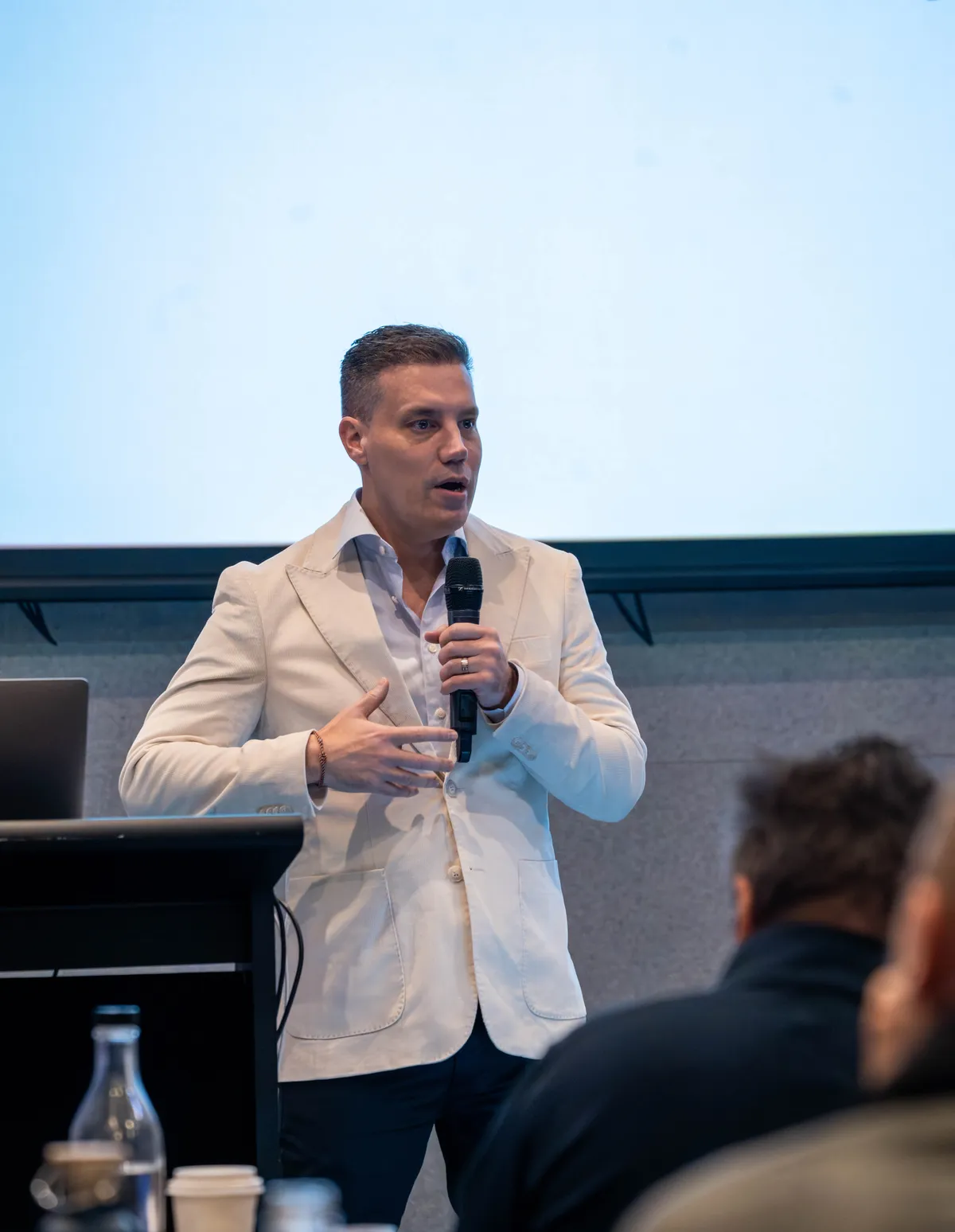
About Benjamin Simkin
Benjamin Simkin is a software engineer turned marketing strategist, the CEO of BusinessNET and the founder of The Mastermind and AI First Foundations.
He has spent 25 years working out why people buy and how a business can run without its owner, first with software, then with marketing and now with AI. Most of what he has learned is in his books.
- $3.1Bin tracked revenue for his clients, in 34 industries
- $300M+in ad spend managed, advertising on Facebook since 2009
- $100Min sales for his own businesses
- Best-selling author
Teaching himself computers
Ages 13 to 19
Benjamin Simkin's career began with a second-hand computer he was given at 13. With nobody around him able to teach programming, he worked through the 1970s programming textbooks in his school library and taught himself five programming languages, and by 16 he had written tens of thousands of lines of code. Learning a field directly from its sources, without waiting for formal training, has stayed with him ever since, from Linux systems to Facebook advertising and, more recently, artificial intelligence.
At 16 he was suspended from school after repeatedly finding his way into its computer network, not to change results but to see whether it could be done. Shortly afterwards, a commercial real estate firm approached his family for help. Its IT manager had left after a dispute and changed every password on the way out. The firm could no longer reach its records, collect rent or reconcile its trust accounts, and within weeks it would have been unable to trade. Benjamin restored access over a single weekend and was paid $2,000, and the owner told him he was capable of running a company of his own. It taught him early that clients pay for the problem solved, not for the credentials of the person solving it, and the same year he began working for himself as a sole trader, fixing computers for friends and their parents, with his mother driving him to each job.
He left school after Year 10, having found that the university IT degrees on offer covered material he already knew. At 17 he built the operations software for a printing distributor and ran the Linux servers of an importing company. At 18 he joined an IT firm that served banks and financial institutions, and within a year he was the engineer it relied on for its most critical work, including million-dollar servers in the Australian Securities Exchange building in Brisbane. In the early years of the internet in Australia he built internet servers for large companies, and he was among the first people in the country to set up satellite internet.
At 19 he discovered that a manufacturer's own instructions for installing a data-protection disk card on Linux erased the very data the card was meant to protect. He developed a safe method and published it free on The Linux Documentation Project, the main reference library for Linux engineers, where his guide is still available.
His first company, ITM
Early twenties
In his early twenties Benjamin founded his first company, ITM (International Technology Management), which installed IT security systems and managed IT for businesses. He wrote the software the company ran on and grew it to eight staff and several hundred clients. His technical skill was not yet matched by business experience, however. He was working 20-hour days, and the business could not cover its costs without him.
He set out to learn business the same way he had learned programming, reading more than 150 books on sales, marketing and management, attending seminars and studying successful operators. Within a few years the company was turning over $950,000 a year while he worked half the hours. In those years he also met Jay Abraham, the American marketing strategist known for his work on business growth and joint ventures, who became his first mentor. Years later, from 2014, Benjamin also handled marketing for Jay's own business.
The company was then tested by a sudden 30% fall in revenue that left it owing $50,000 in rent, more than $100,000 on credit cards and further amounts to the Australian Taxation Office. Benjamin returned ITM to profit within six months and repaid every debt within 18.
ITM also gave him the central idea of his later work. When he started, products that cost him $100 sold for $300. By the time he sold the company the same products sold for about $110, even though his service had never been better. The cause was competition: as more firms offered the same thing, customers came to see it as ordinary and paid less for it. In a crowded market, he concluded, working harder does not restore profit, and the answer lies in how a business is positioned. That conclusion became the basis of his book Demand Architecture.
He sold ITM in his early twenties for $1.2 million. While running a point-of-sale business afterwards, he began teaching himself online marketing.
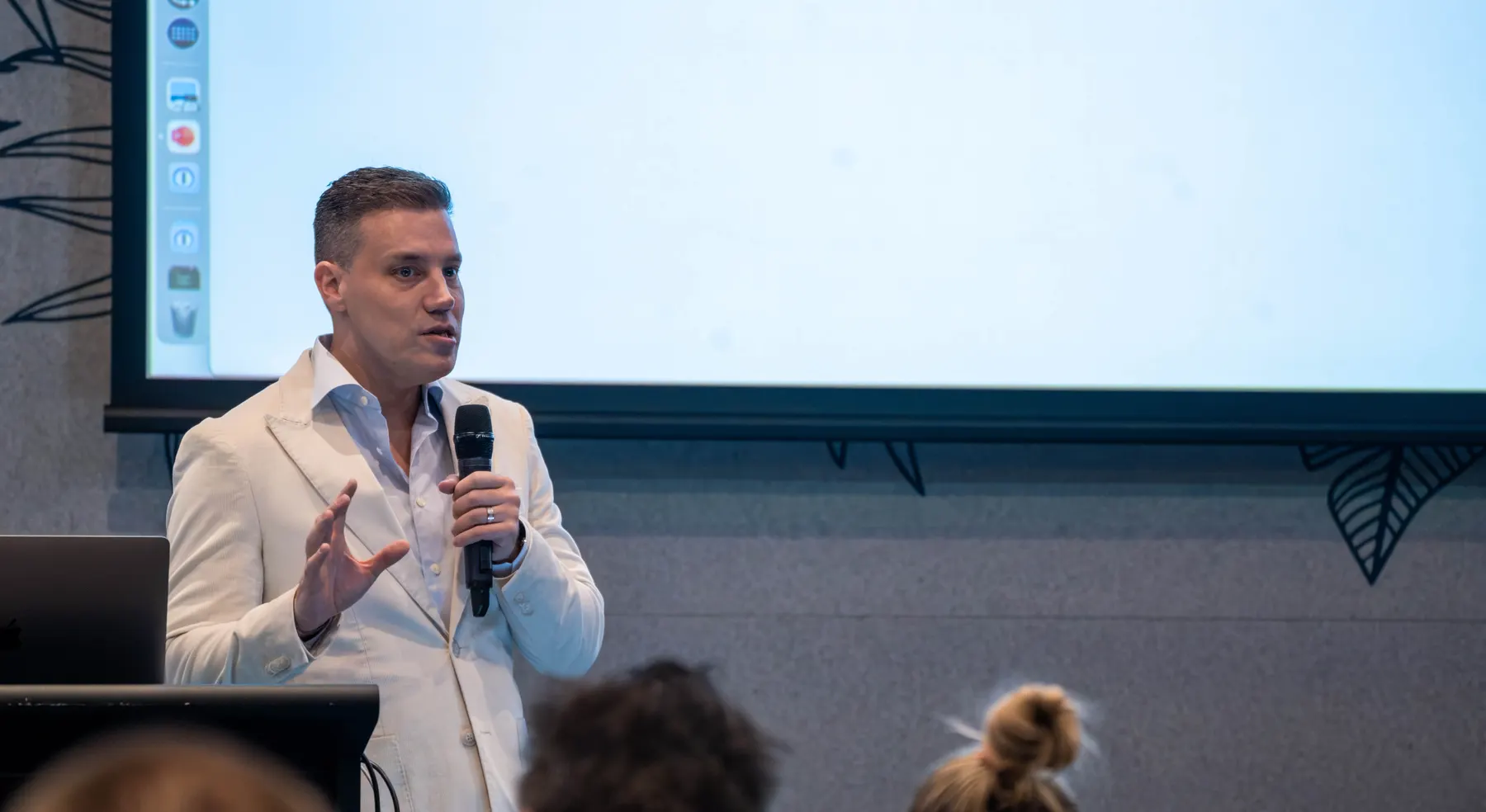
BusinessNET and the marketing years
2005 onwards
In 2005 Benjamin was referred his first marketing client, Canterbury Property Services, a Queensland property investment company then turning over about $30 million a year. He had never run a campaign or built a website, but he accepted the work for a fee of $20,000 paid up front. Rather than create something new, he took the newspaper advertisement that was already producing sales for the company and emailed it, unchanged, to a rented list of 10,000 people aged 30 to 55 in its home city. The campaign generated $3 million in sales.
Two principles came out of that first campaign, and both still guide his work. The first is that a message already proven to sell, put in front of the right audience, is usually worth more than a new idea. The second concerns pricing: having been paid $20,000 for $3 million in sales, he resolved to charge for the value he creates rather than the time he spends. He founded BusinessNET on the strength of that result and turned over $1 million in its first year as its only employee. Canterbury grew to $115 million a year within four and a half years, now turns over more than $180 million, and remains a client today.
The agency's results went on to rank Benjamin in the top 1% of advertisers in the world, a position reached by a business that had begun with one client, one newspaper advertisement and a rented list of 10,000 email addresses.
In 2009 he became one of the original advertisers on Facebook. There were no courses or experts to learn from, so he learned with money at stake. Early on he promised a client $1 million in sales from a $20,000 budget, spent the budget without result, and then invested $20,000 of his own until the campaign worked. The client went on to make more than $1 million in sales and stayed with BusinessNET for years. Benjamin calls it his $40,000 Facebook education, and it shaped the testing discipline he still applies: his campaigns often begin with as many as 200 variations of an advertisement.
As the agency grew, Benjamin built the team and systems that allowed it to run without his daily involvement. For a decade BusinessNET ran the Facebook advertising for Kerwin Rae, one of Australia's best-known business strategists, as that business grew past $100 million in revenue. Clients have ranged from start-ups to companies with nine-figure turnover, across real estate, finance, accounting, dentistry, fitness, martial arts, recruitment and the trades.
In total Benjamin has managed more than $300 million in advertising spend across 34 industries, with individual campaigns running at up to $10,000 a day. The systems he has built have generated $3.1 billion in tracked revenue for clients and $100 million in sales for his own businesses, and he has sold several businesses for seven- and eight-figure sums. Not every venture has succeeded. He once spent $100,000 of his own money running one of his own offers a single time, and it never made a sale. That is why he now examines the market and the numbers before any further money goes into advertising.
Others in the field have sought out his expertise. Naomi Simson, founder of the experience-gift company RedBalloon and an investor on Shark Tank Australia, invited him to teach her business community where to spend their Facebook advertising budgets. Siimon Reynolds, co-founder of Photon Group, which grew into the world's 15th-largest marketing communications group and sold for $500 million, interviewed him on the subject. Siimon is also one of his mentors, and from 2015 Benjamin's work for one of Siimon's businesses added $4.6 million to its sales.

The results he has produced for clients in more than a dozen industries are set out, client by client, on the results page.
The Mastermind
2014 onwards
By 2014 BusinessNET was earning millions of dollars a year without requiring long hours from its founder, yet Benjamin found the work isolating. He had no peers who understood the decisions he faced, or with whom he could share the results. He regularly flew to the United States for seminars and masterminds, but the momentum from each trip faded within months of returning home. That year he attended Titans of Direct Response, an event run by the American direct-response marketer Brian Kurtz, and described the problem to Brian. Brian told him: "You need to find a mastermind to join in Australia, and if you can't, you need to create one."
Benjamin found no Australian group that met his standard. Most were run by coaches who had not built substantial businesses themselves, or admitted anyone willing to pay. Later in 2014 he founded The Mastermind as a group for established, successful business owners, and grew it to $2.8 million in annual revenue. Brian Kurtz has since spoken at its events.
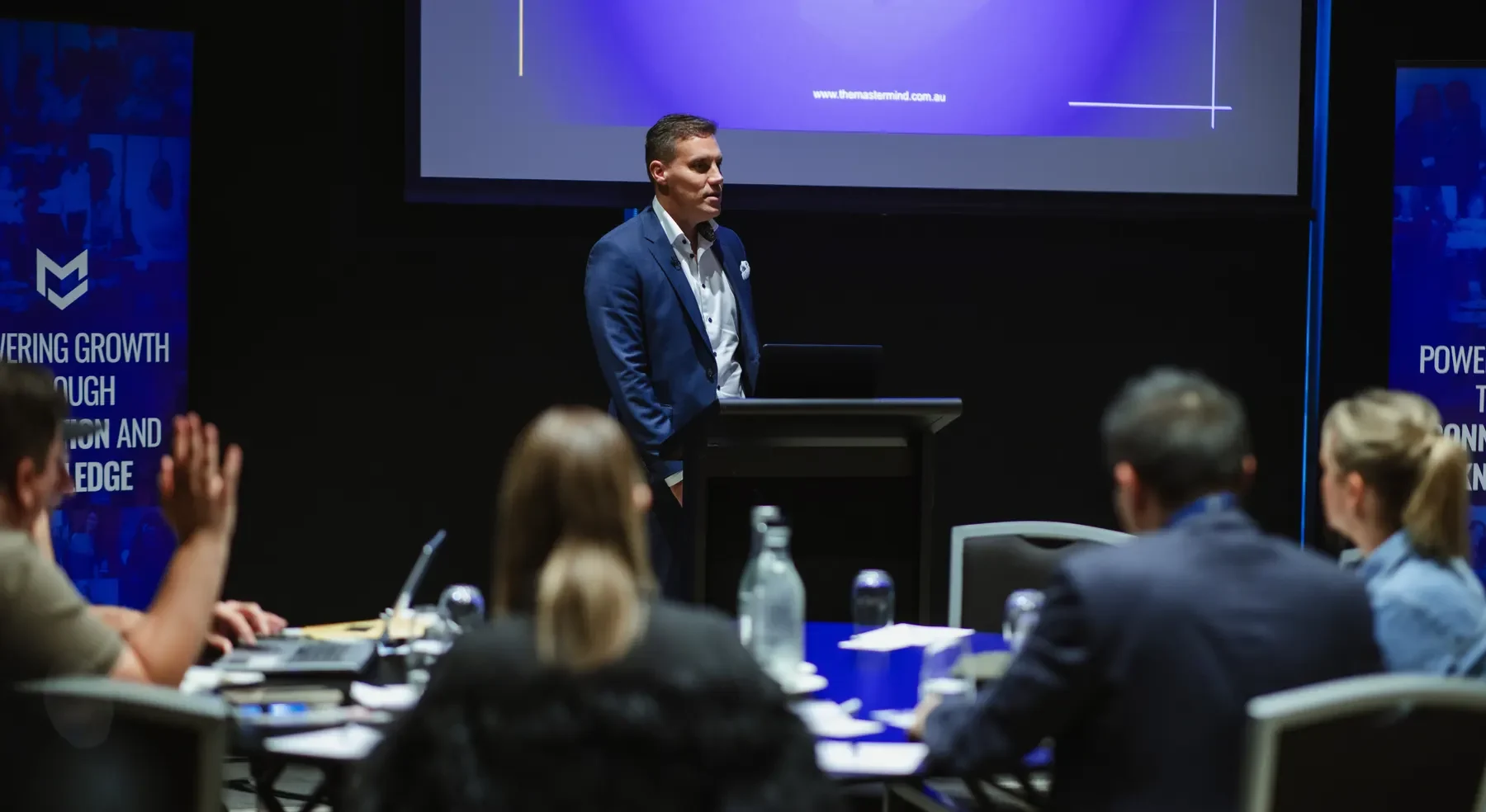
In its early years Benjamin taught members directly through fortnightly online workshops, answered questions in the members' group within 24 hours, and hosted events in Brisbane, Sydney and Melbourne, with an annual conference in Singapore. The Mastermind has since held events in Los Angeles, New York and Las Vegas. In June 2018 he organised, funded and hosted the Gary Halbert Memorial Event, a two-day conference marking what would have been the 80th birthday of one of the most influential direct-response copywriters of the twentieth century. Members of the Halbert family and the copywriters Halbert trained were among the speakers.
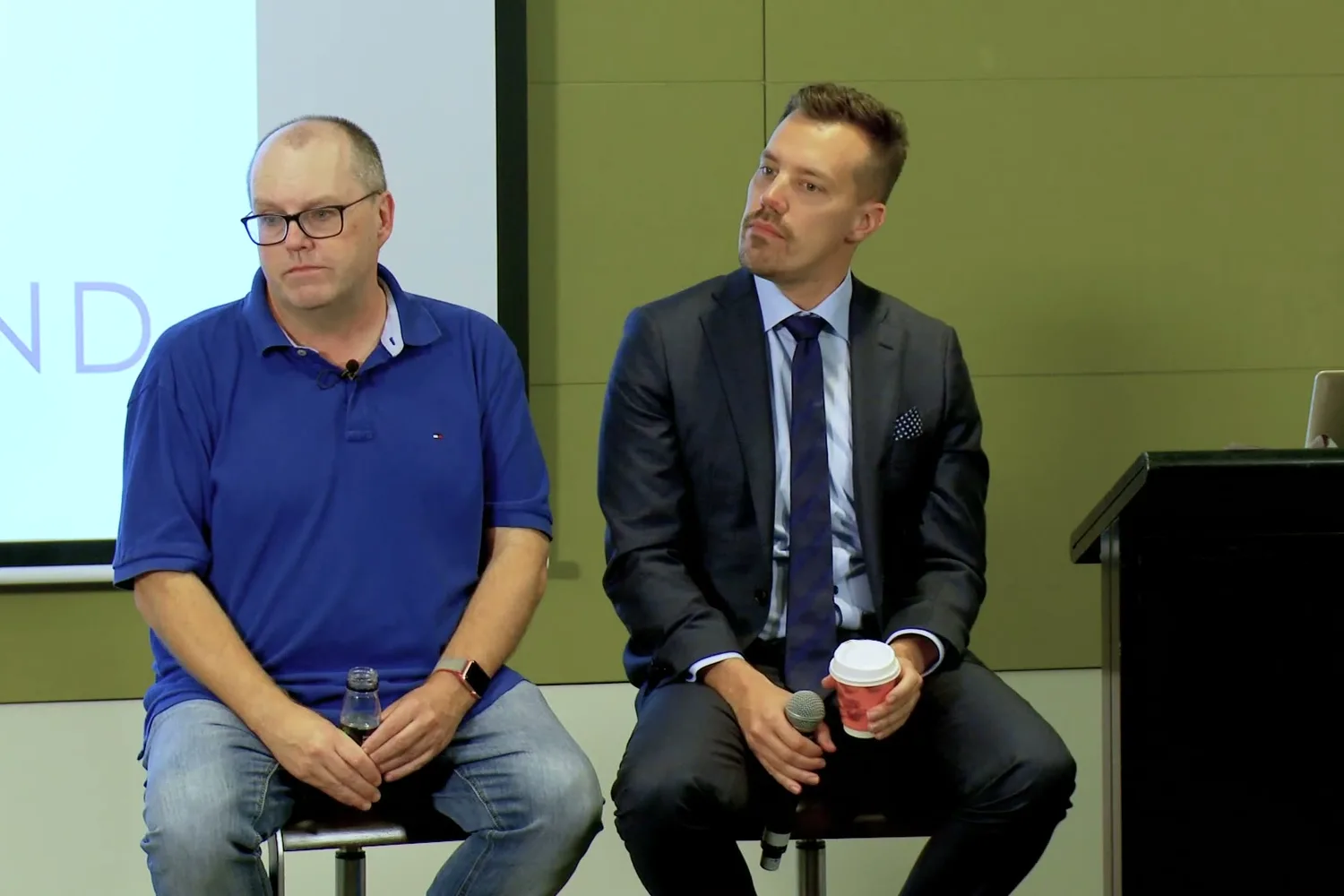
Many members have gone on to lead their industries, and their stories show what the group is for. Michael McCormick began as an insurance salesman and went on to run the largest insurance network in the United States, with 50,000 agents. Brad East, a mortgage broker when he joined, now runs an award-winning, multi-million-dollar loan business, and Greg Smargiassi used the group to break through a growth plateau that had held his business back for years.
Others show how quickly the change can come. Kim Barrett joined with a single client, working from a spare room, and built a million-dollar marketing agency with more than ten staff in under two years. Charley Valher, one of the first ten members, was charging his agency's clients $500 a month. After raising those prices five to ten times and starting a second company with another member, he had both businesses running without him within three years, and today he runs Valher Media, one of Australia's most successful agencies. Carissa Hill, a business coach, went from enrolling one new client every week or two to one or more every day, at four times the price, adding more than $840,000 to her business. She is now a leader in her field and a multi-millionaire. Between them, members have scaled 427+ businesses to seven and eight figures.
What members say they have achieved, the wins they have posted, the speakers who have taught at The Mastermind and its recent events are all on the results page.
The software he has built
2010 to now
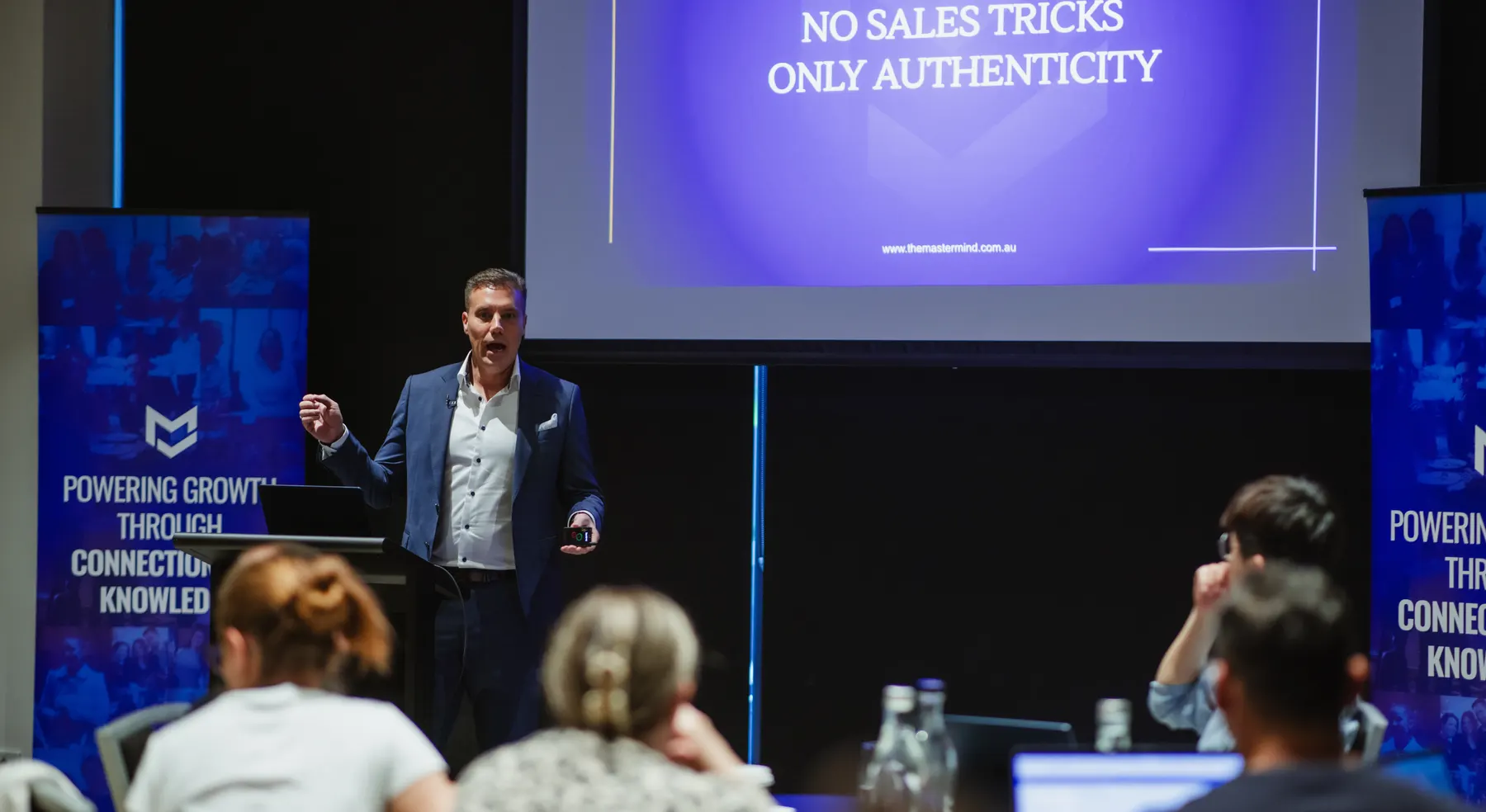
Unusually for a marketer, Benjamin has kept writing software throughout his career, and when one of his businesses needs a tool that doesn't exist, he builds it. He writes mainly in Go, with PostgreSQL and Redis behind it, React and Next.js on the web and React Native for iPhone, and he builds his AI features on Anthropic's Claude. Most of his tools began as answers to problems in BusinessNET or The Mastermind and several, including Nexus and the iPhone app, are available exclusively to members of The Mastermind. Nexus, for example, follows each customer across devices and links every sale to the advertisement that produced it, so an owner can see the real return on each advertising dollar instead of the platform's own estimate. The Mastermind's member portal alone runs to about 59,000 lines of Go.
The tools he has built include:
- Lead CRM, 2010A CRM system for managing leads, which still has users today.
- NexusTracking and attribution for advertisers. It matches visitors across devices, filters out bots, keeps tracking first-party so it survives ad blockers and Safari's privacy limits, and ties each sale back to the ad that brought the buyer in. Available exclusively to Mastermind members.
- CallSpectreA software service that takes in sales-call transcripts, analyses them with Claude, coaches each salesperson, reports on speed and conversion, and bills each business that uses it by credit.
- LeadfishAI lead research. From basic contact details it researches a business lead, scores it against the ideal customer, and writes a summary, the next action and openers for the first conversation.
- AgentWebhookThe first pull-based webhook system in the world, built for AI agents. Online services announce events, such as a payment or a new lead, by sending a webhook, and receiving one has normally meant running a public server that listens for it. AgentWebhook holds each event in a secure queue until the agent or workflow collects it, so systems inside a company network or on a laptop can receive webhooks with no open ports or tunnels.
- VendorConnectA project management platform for businesses working with outside vendors and contractors.
- The Mastermind AI Copywriting SystemHeadlines, ads, VSL scripts and sales pages for Mastermind members, built on proven direct-response frameworks.
- The Mastermind portal145 courses and about 1,800 lessons, a community feed and an AI mentor built on Claude that points each member to the right lesson and can talk by voice. It also has private one-to-one call rooms whose recordings are transcribed, summarised and divided into chapters automatically, and an iPhone app for members.
- The Agency SystemA remote server that gives Claude his full advertising playbook, from angles and hooks to landing pages, launching ads and optimising them, for Mastermind members.
- The Mastermind CRMClients, support, member credits and event bookings, connected to the portal.
- Digital signage platformA cloud service and a device agent that turn inexpensive Linux TV boxes into managed screens.
- AI video systemProduces short-form advertising video.
- CRO tool, 2024An AI tool that finds and fixes what stops a page converting.
- ClientRollMembership and client management with recurring direct-debit and card billing, for several businesses at once.
- Course MakerTurns a written book into a finished video course.
Artificial intelligence
2022 to now
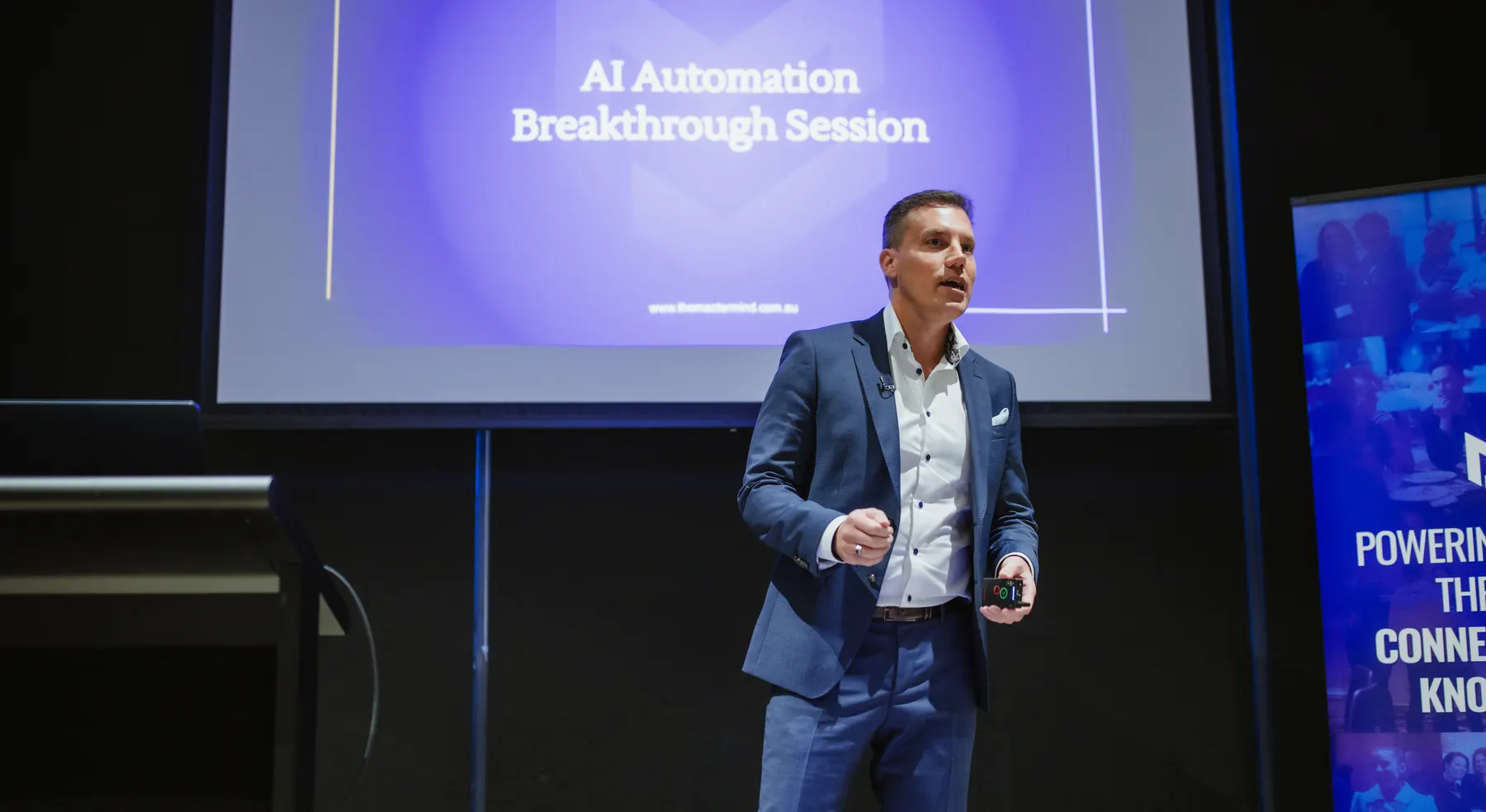
Because he is an engineer first, Benjamin approached artificial intelligence as something to build with. When ChatGPT was released in late 2022 he tested it on the work his agency is paid for and banned it at BusinessNET, because the advertisements and sales copy it wrote fell well short of the agency's standard. He then built his own AI system, trained on a decade of Mastermind teaching and the agency's best-performing campaigns, and the first campaign it wrote unaided produced well-qualified sales calls. He has since turned two decades of campaign knowledge into an automated marketing system, and on one campaign it found customers ten times more efficiently than the agency's previous methods.
He has rebuilt his own companies around the same idea. Two of them, his marketing agency and an education company, now run about 80% automated, and the agency, two decades old, is more efficient than at any point in its history. An AI system sits in the sales team's calls, coaches each salesperson afterwards and writes the notes into the CRM, which ended the weekly chasing of staff to update their records. An AI agent chases unpaid invoices. A marketing campaign that took three weeks of full-time work can now be built in an afternoon. His online stores answer routine customer requests automatically. None of this has been used to replace staff. His approach is to move people whose work is automated into roles that create more value for the business.
In 2026 he set out the method in The AI First Company and began teaching it to other owners through AI First Foundations. It starts by measuring what he calls an owner's Operator's Beta, how much of the business depends on the founder's effort and presence, and then works through each task in order: delete it, outsource it, automate it or delegate it. Systems are built in the same order of caution, with ordinary code first, AI in clearly fenced places second and autonomous agents last. The method draws on a library of 76 named solutions and 12 working demonstration systems, which Benjamin built himself with Claude Code. Owners attend two-day workshops, bringing their own businesses, and attendees have described it as structural design and implementation training rather than a course in tools.
The method is also written up at length. The two volumes of AI First Implementation are its technical manuals, and How to Become a CAIO is for people who want to lead AI inside a company. The Claude Bible is a 484-page guide to using Claude for business and everyday work. He also teaches the subject in masterclasses, on his YouTube channel and in his essays on Substack.
Books
2015 to now
Benjamin's books run from How to Evaluate & Seize Opportunities in September 2015 to Demand Architecture in November 2026. Each one sets down a method he has used in his own businesses or with clients, so the shelf follows his career. The marketing books cover getting clients, how buyers decide, premium pricing and Facebook and Instagram advertising. The AI books show owners how to rebuild a business so it runs on systems and AI instead of on them, and The Time Architect explains how he organises his work and life around his time. Every title is described further down this page.
What he does now
Today
Benjamin is the chief executive of BusinessNET, which builds client acquisition systems for businesses, and he leads The Mastermind and AI First Foundations. In 2017 he founded a portfolio company that invests in businesses across several industries, and he still runs it. Because his own companies now run largely on systems, software and AI, he works 25 to 30 hours a week, against 80 to 120 in his early years. He spends that time on the work only he can do: developing new ideas, writing, teaching and setting the direction of the businesses he leads. How he made that change is the subject of The Time Architect. He lives in Brisbane.
Recognition and press
- His agency has been ranked in the top 1% of advertisers in the world.
- He was one of the first advertisers in the world let into the private beta of the Conversions API.
- In 2016 the Huffington Post named him the world's number one Facebook marketer, and he has been written up in Forbes, Inc. and CNBC.
- CNBCSelf-made millionaire shares tips to build a million-dollar business (2020)
- ForbesSix ways to blow up your business with Facebook ads (2016)
- HuffPostTop 6 Facebook marketers
- HuffPostHow this Aussie entrepreneur built his business
- Warrior ForumTop 20 Facebook marketers you need to follow in 2018
- Change CreatorInterview: getting your marketing working
- Breakthrough Marketing Secrets5 steps to grow your business into a multi-million dollar company
- Geniuses of CopywritingProfile
He has also been featured in Forbes, Entrepreneur, HuffPost, CNBC, Digital Journal, Influencive, The Courier-Mail, Australian Broker, Inc., BuzzFeed, Business.com, Facebook and Warrior Forum.
Short bio
For event hosts and editors. Use it as it is, or shorten it by dropping whole sentences.
Benjamin Simkin is a marketing strategist and software engineer, the CEO of BusinessNET and the founder of The Mastermind and AI First Foundations. One of the original Facebook advertisers in 2009, he has built client acquisition systems for businesses in 34 industries that have generated $3.1 billion in tracked revenue for his clients, and he has generated $100 million in sales for his own businesses. For over a decade he ran the marketing for Kerwin Rae as that business grew past $100 million, he helped Canterbury Property Services grow to more than $180 million a year, and he has helped many other companies grow to seven and eight figures as well. He builds his own software and AI systems, runs his companies largely on them, and teaches business owners to do the same. He is a best-selling author, and his books include Demand Architecture and The AI First Company.
There are two ways to work with Benjamin
The Mastermind if you want your business to grow faster, and AI First Foundations if you want it to stop depending on you. Or start with one of his books.